Artists often debate whether charcoal or graphite is the better medium for drawing. Both materials have unique qualities that influence texture, tone, and expression. Understanding their differences helps creators select the right tool for their style, subject matter, and desired outcome.
What Is Charcoal in Drawing?
Charcoal is a traditional medium made from burnt organic material, often wood. It produces rich, dark marks and is prized for its expressive qualities.
Defining traits of charcoal:
- Deep Black Tones – Creates dramatic contrasts.
- Soft Texture – Easily smudged for shading.
- Variety of Forms – Available as sticks, pencils, or compressed blocks.
- Versatility – Works well for quick sketches or detailed shading.
- Fragility – Can break or crumble easily.
Charcoal is ideal for bold, expressive work. Its softness allows artists to create atmospheric effects, but it requires fixatives to prevent smudging. Many artists use charcoal for life drawing or large compositions where dramatic tonal range is essential.
What Is Graphite in Drawing?
Graphite is a crystalline form of carbon used in pencils. It produces smooth, controlled lines and is valued for precision.
Defining traits of graphite:
- Range of Hardness – From soft (dark) to hard (light).
- Smooth Application – Glides easily across paper.
- Durability – Less fragile than charcoal.
- Detail Capability – Excellent for fine lines and textures.
- Shine Effect – Can create reflective surfaces when layered.
Graphite is perfect for technical drawings, portraits, and detailed studies. Its range of hardness grades (from 9H to 9B) allows artists to control tone and texture. Unlike charcoal, graphite is cleaner and easier to erase, making it versatile for everyday sketching.
Comparing Tonal Range of Charcoal and Graphite
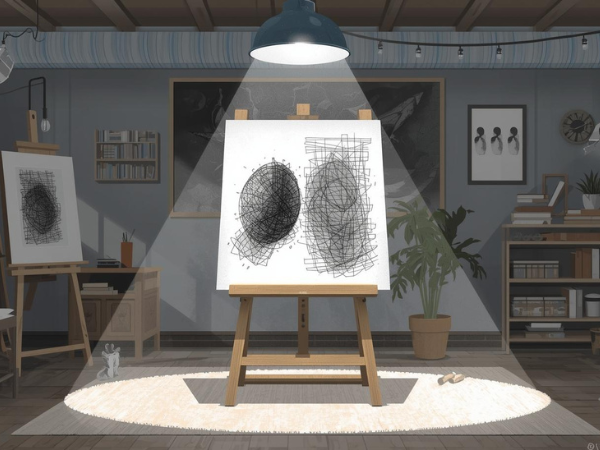
Tone is one of the most important differences between charcoal and graphite. Charcoal produces deeper blacks, while graphite offers smoother gradients.
Tonal comparisons:
- Charcoal – Intense darks, dramatic contrasts.
- Graphite – Subtle grays, controlled shading.
- Charcoal – Matte finish, no shine.
- Graphite – Reflective sheen under heavy layering.
- Charcoal – Ideal for expressive, bold work.
Artists choose based on desired mood. Charcoal excels in dramatic, high‑contrast pieces, while graphite is better for delicate tonal transitions. Combining both can create dynamic drawings with depth and subtlety.
Tools and Forms of Charcoal
Charcoal comes in several forms, each offering unique qualities.
Types of charcoal tools:
- Vine Charcoal – Soft, light marks, easy to erase.
- Compressed Charcoal – Dense, dark strokes.
- Charcoal Pencils – Controlled application.
- Powdered Charcoal – Smooth shading effects.
- Charcoal Blocks – Large coverage for big works.
Each form serves different purposes. Vine charcoal is great for sketching, while compressed charcoal provides strong darks. Charcoal pencils allow precision, and powdered charcoal creates atmospheric effects. Choosing the right form depends on the project’s scale and style.
Tools and Forms of Graphite
Graphite is most commonly found in pencils, but it also comes in sticks and powders.
Types of graphite tools:
- Graphite Pencils – Standard tool with hardness grades.
- Graphite Sticks – Broad strokes and shading.
- Mechanical Pencils – Consistent fine lines.
- Graphite Powder – Smooth tonal coverage.
- Woodless Graphite – Full graphite core for versatility.
Graphite tools provide flexibility for both technical and artistic work. Pencils are ideal for detail, while sticks and powders cover larger areas. Mechanical pencils are favored for precision, and woodless graphite offers bold strokes.
Advantages of Charcoal
Charcoal offers unique benefits for expressive drawing.
Key advantages:
- Rich Blacks – Strong tonal impact.
- Expressive Marks – Dynamic, bold strokes.
- Smudge Potential – Easy blending for shading.
- Atmospheric Effects – Great for mood and drama.
- Large Coverage – Efficient for big compositions.
Charcoal is best for artists seeking drama and emotion. Its ability to create intense contrasts makes it powerful for life drawing and expressive art. However, it requires careful handling and fixatives to preserve work.
Advantages of Graphite
Graphite provides control and versatility.
Key advantages:
- Precision – Excellent for detail.
- Range of Hardness – Flexible tonal control.
- Clean Application – Less messy than charcoal.
- Durability – Long‑lasting and stable.
- Erasability – Easy corrections.
Graphite is ideal for technical drawings, portraits, and studies requiring accuracy. Its clean application makes it practical for everyday sketching. Artists appreciate its reliability and ability to produce subtle tonal variations.
Challenges of Using Charcoal
Despite its strengths, charcoal has limitations.
Common challenges:
- Messiness – Easily smudges hands and paper.
- Fragility – Breaks or crumbles.
- Fixative Requirement – Needs spray to preserve.
- Limited Precision – Harder to achieve fine detail.
- Storage Issues – Dust and residue.
Artists must manage charcoal carefully. Fixatives help preserve work, and blending tools reduce mess. While challenging, its expressive power makes charcoal worth mastering.
Challenges of Using Graphite
Graphite also presents difficulties.
Common challenges:
- Shiny Finish – Reflective surfaces under heavy use.
- Limited Dark Range – Cannot match charcoal’s deep blacks.
- Smudge Potential – Though less than charcoal, still possible.
- Overuse of Erasing – Can damage paper.
- Uniformity Risk – Drawings may look flat if not varied.
Graphite requires skill to avoid flatness. Artists must vary pressure and hardness to create depth. Despite challenges, graphite remains versatile and reliable.