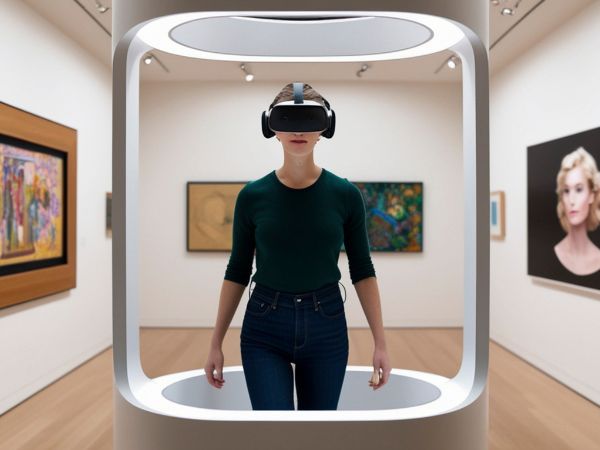
Virtual exhibitions are transforming the way audiences engage with art, history, and culture. Whether viewed in simple 2D formats or immersive 3D environments, these digital showcases offer unique advantages.
What Are 2D Exhibitions?
2D exhibitions are digital displays presented on flat screens, often resembling online galleries or slideshows. They are easy to access and require minimal technology, making them widely available to audiences worldwide.
- Accessibility – Works on any device with internet access.
- Ease of Use – Simple navigation without technical barriers.
- Low Bandwidth – Requires less data, ideal for slower connections.
- Cost‑Effective – Cheaper to produce and maintain.
- Educational Value – Great for schools and quick reference.
2D exhibitions are perfect for audiences who want straightforward viewing without complex setups. They democratize access to art and culture, ensuring anyone can participate regardless of resources. While less immersive than 3D, they remain a vital tool for education and outreach.
What Are 3D Exhibitions?
3D exhibitions simulate real‑world gallery spaces, allowing visitors to explore virtually through avatars or interactive navigation. They replicate the feeling of walking through a museum, offering depth and perspective.
- Immersion – Visitors feel part of the environment.
- Interactivity – Avatars and clickable objects enhance engagement.
- Spatial Awareness – Artworks are experienced in context.
- Innovation – Uses VR and AR technologies.
- Global Reach – Accessible worldwide with proper devices.
3D exhibitions provide a richer experience, appealing to audiences who crave interaction and realism. They bridge the gap between physical and digital spaces, making cultural experiences more dynamic. Although they require stronger technology, their impact is unmatched in terms of engagement.
Accessibility and Audience Reach
Accessibility determines how many people can enjoy an exhibition. 2D formats excel in inclusivity, while 3D requires more advanced setups.
- 2D Strengths – Works on phones, tablets, and computers.
- 3D Limitations – Needs VR headsets or powerful devices.
- Global Access – 2D reaches wider audiences instantly.
- Inclusivity – 2D supports schools and communities with limited resources.
- Engagement – 3D captivates tech‑savvy audiences.
Accessibility is crucial for cultural preservation. While 3D exhibitions push boundaries, 2D ensures no one is excluded. Together, they balance inclusivity with innovation, making exhibitions adaptable to diverse audiences.
Immersion and User Experience
Immersion defines how deeply audiences connect with exhibitions. 3D excels in creating lifelike experiences, while 2D focuses on clarity.
- 2D Experience – Clear visuals, simple navigation.
- 3D Experience – Realistic environments with avatars.
- Emotional Impact – 3D enhances connection to art.
- Learning Value – 2D supports structured education.
- Engagement – 3D encourages exploration and discovery.
User experience varies by audience. Some prefer the simplicity of 2D, while others enjoy the adventure of 3D. Both formats enrich cultural appreciation in unique ways.
Cost and Technical Requirements
Budget and technology influence exhibition design. 2D is affordable, while 3D requires investment.
- 2D Costs – Minimal production expenses.
- 3D Costs – Higher due to VR/AR integration.
- Technical Needs – 2D works on basic devices.
- 3D Needs – Requires strong hardware and internet.
- Maintenance – 2D is easier to update.
Cost plays a major role in accessibility. Institutions often choose 2D for outreach, while 3D suits flagship projects. Both formats balance practicality with ambition.
Educational Applications
Education benefits greatly from digital exhibitions. 2D offers simplicity, while 3D enhances engagement.
- 2D in Schools – Easy integration into lessons.
- 3D in Learning – Interactive exploration of history and art.
- Accessibility – 2D supports students with limited resources.
- Engagement – 3D captivates learners through immersion.
- Collaboration – Both formats encourage group learning.
Educational institutions use both formats strategically. 2D ensures inclusivity, while 3D inspires creativity. Together, they enrich learning experiences across disciplines.
Cultural Preservation and Innovation
Digital exhibitions preserve culture while innovating presentation. 2D archives content, while 3D reimagines experiences.
- 2D Preservation – Reliable documentation of artworks.
- 3D Innovation – Recreates environments and contexts.
- Accessibility – 2D ensures long‑term availability.
- Engagement – 3D attracts modern audiences.
- Balance – Both formats serve cultural missions.
Preservation and innovation go hand in hand. 2D secures history, while 3D revitalizes it for future generations. Both are essential for cultural sustainability.
Future of Virtual Exhibitions
The future blends 2D and 3D, offering hybrid experiences. Technology will continue to evolve, making exhibitions more dynamic.
- Hybrid Models – Combining 2D accessibility with 3D immersion.
- AI Integration – Personalized tours and recommendations.
- Global Collaboration – Shared exhibitions across borders.
- Sustainability – Eco‑friendly digital solutions.
- Innovation – VR, AR, and holograms expanding possibilities.
Virtual exhibitions will redefine cultural engagement. By merging formats, institutions can reach broader audiences while offering immersive experiences. The future is inclusive, interactive, and innovative.
Conclusion: Which Experience Works Best?
Choosing between 2D and 3D depends on goals and audiences. 2D excels in accessibility, while 3D shines in immersion.
- 2D Strengths – Affordable, inclusive, easy to use.
- 3D Strengths – Immersive, interactive, innovative.
- Audience Needs – Decide based on resources and goals.
- Hybrid Potential – Combining both for maximum impact.
- Cultural Value – Both formats enrich global heritage.
Ultimately, neither format is superior. Each serves unique purposes, and together they create a balanced ecosystem for digital exhibitions. The best choice depends on context, audience, and vision.