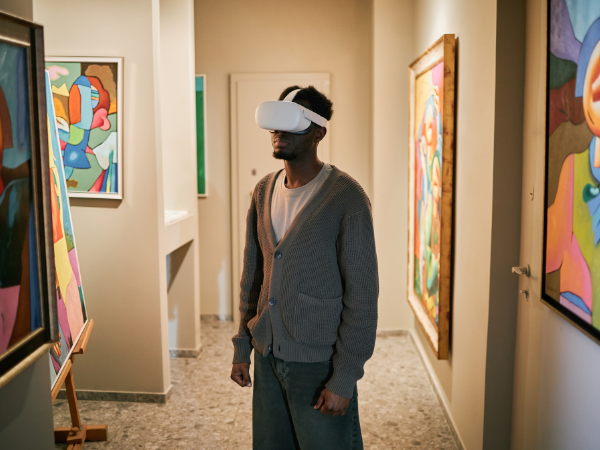
Virtual Reality (VR) is reshaping the fine art landscape by merging immersive technology with traditional creativity. Artists are no longer confined to canvases or galleries; instead, they can build entire worlds where viewers step inside the artwork itself.
The Rise of Virtual Reality in Fine Art
Virtual Reality has emerged as a powerful medium for artists, enabling them to create interactive environments that transcend traditional boundaries. Unlike static paintings or sculptures, VR art invites viewers to explore and engage with the work in real time.
Key Developments:
- VR headsets allow immersive exploration of digital art spaces
- Artists use tools like Tilt Brush and Oculus Medium to sculpt in 3D
- Virtual museums and galleries expand accessibility worldwide
- Interactive installations redefine audience participation
This rise signals a shift in how art is experienced, making creativity more dynamic and inclusive.
Transforming the Artist’s Creative Process
For artists, VR is not just a display tool but a new way of thinking about creation. It allows them to experiment with scale, perspective, and interactivity in ways that traditional mediums cannot.
Creative Advantages:
- Freedom to design immersive 3D environments
- Ability to manipulate scale beyond physical limitations
- Integration of sound, motion, and spatial effects
- Real‑time collaboration with other artists globally
This transformation empowers artists to push boundaries, blending imagination with digital innovation to craft experiences that feel alive.
Virtual Museums and Global Accessibility
VR has opened doors to virtual museums and galleries, making fine art accessible to audiences worldwide. These platforms allow people to experience exhibitions without geographical or financial barriers.
Accessibility Benefits:
- Virtual tours of renowned museums from home
- Interactive exhibitions available globally
- Democratization of art appreciation
- Opportunities for emerging artists to showcase work
By breaking down barriers, VR ensures that art is no longer limited to physical spaces, expanding its reach to diverse audiences.
Immersive Storytelling Through VR Art
VR enables artists to tell stories in ways that immerse viewers fully within the narrative. Instead of observing from a distance, audiences become participants in the unfolding experience.
Storytelling Features:
- 360‑degree environments for narrative depth
- Interactive elements that respond to viewer actions
- Emotional engagement through sensory immersion
- Blending of visual art with performance and theater
This storytelling approach transforms art into an experience, making it more memorable and impactful.
Tools and Technologies Driving VR Art
The development of VR art relies on advanced tools and platforms that empower artists to create immersive works. These technologies are evolving rapidly, offering new possibilities.
Popular Tools:
- Google Tilt Brush for painting in 3D space
- Oculus Rift and HTC Vive for immersive experiences
- Unity and Unreal Engine for interactive environments
- VR sculpting tools like Oculus Medium
These tools provide artists with the digital brushes and canvases needed to craft groundbreaking works.
Audience Engagement in Virtual Reality Art
One of the most significant impacts of VR in fine art is how it changes audience engagement. Viewers are no longer passive; they interact, explore, and even influence the artwork.
Engagement Highlights:
- Interactive exhibitions where viewers shape outcomes
- Personalized experiences based on user input
- Greater emotional connection through immersion
- Social VR platforms for shared art experiences
This engagement creates deeper connections between art and audience, redefining the role of the viewer.
Challenges and Limitations of VR in Fine Art
Despite its promise, VR in fine art faces challenges that must be addressed for wider adoption. These include technical, financial, and accessibility concerns.
Key Challenges:
- High cost of VR equipment and software
- Limited access for audiences without technology
- Learning curve for artists adapting to digital tools
- Preservation and longevity of digital artworks
Acknowledging these challenges is crucial to ensuring VR art evolves sustainably and inclusively.
The Future of Fine Art in Virtual Reality
Looking ahead, VR is poised to become a mainstream medium in fine art. As technology advances, artists will gain more tools to create immersive, interactive works that redefine creativity.
Future Trends:
- Integration of AI with VR for generative art
- Expansion of virtual galleries and marketplaces
- Greater collaboration across disciplines
- Enhanced realism through improved hardware
The future promises a fusion of art and technology that expands the boundaries of human imagination.
Conclusion: A New Era of Creativity
Virtual Reality has ushered in a new era for fine art, transforming how artists create and audiences experience. By merging technology with imagination, VR art offers immersive, interactive, and globally accessible experiences. While challenges remain, the potential for innovation is vast, marking VR as a defining force in the evolution of creativity.