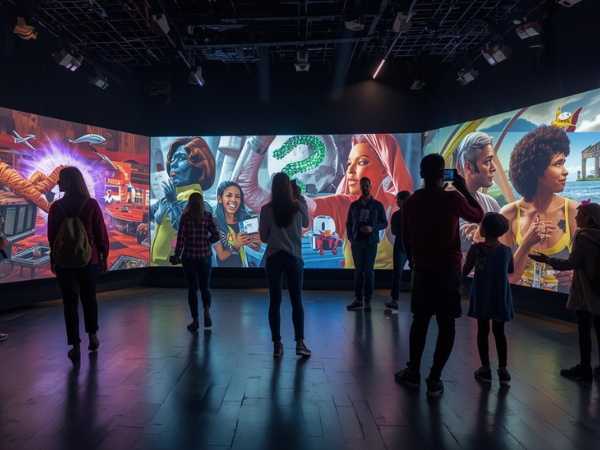
Virtual exhibitions have become a cornerstone of cultural engagement in 2026, offering audiences worldwide the chance to explore art, history, and innovation without leaving home. With advancements in VR and AR, these exhibitions provide immersive experiences that rival physical galleries. Whether viewed in simple 2D or through interactive 3D avatars, they allow people to connect with creativity in new ways. Below are five of the most exciting exhibitions available this year, along with insights into their accessibility, technology, and cultural impact.
1. CES Virtual Art & Innovation Showcase
The Consumer Electronics Show (CES) in Las Vegas has expanded its reach with a virtual exhibition dedicated to art and innovation. This digital showcase blends technology with creativity, allowing visitors to explore futuristic concepts in a gallery‑like environment.
- Immersive VR Spaces – Walk through interactive halls with avatars.
- Tech Meets Art – Displays of AI‑generated paintings and digital sculptures.
- Global Access – Available worldwide via 2D and 3D platforms.
- Interactive Demos – Hands‑on experiences with new creative tools.
- Networking Opportunities – Connect with artists and technologists.
CES’s virtual art showcase demonstrates how technology can elevate cultural experiences. By merging innovation with artistic expression, it provides a glimpse into the future of creativity. This exhibition is ideal for those interested in both cutting‑edge tech and contemporary art, making it one of 2026’s must‑visit digital destinations.
2. AWE Asia Virtual Gallery
Augmented World Expo (AWE) Asia in Singapore has introduced a virtual gallery that highlights the intersection of art and extended reality. Visitors can explore curated exhibitions that showcase how AR and VR are reshaping creative industries.
- AR Installations – Interactive works blending digital overlays with real‑world objects.
- VR Storytelling – Narrative‑driven experiences in immersive environments.
- Global Artists – Contributions from creators across Asia and beyond.
- Educational Panels – Talks on the role of XR in art.
- Accessible Formats – Available in both 2D and 3D viewing modes.
AWE Asia’s virtual gallery emphasizes the role of XR in redefining artistic boundaries. It provides a platform for artists to experiment with immersive technologies while giving audiences a chance to experience creativity in new dimensions. This exhibition is particularly valuable for those curious about how technology is shaping the future of art.
3. MWC Barcelona Digital Culture Pavilion
Mobile World Congress (MWC) Barcelona has launched a digital culture pavilion that highlights the fusion of mobile technology and creative expression. This virtual exhibition showcases how connectivity drives innovation in art and design.
- Mobile Artworks – Pieces created using smartphones and tablets.
- Interactive Installations – Explore digital sculptures in 3D.
- Global Collaboration – Artists from multiple continents contribute.
- Tech Integration – Demonstrations of AR apps for cultural engagement.
- Hybrid Access – Available online and in VR headsets.
MWC Barcelona’s pavilion demonstrates how mobile technology empowers creativity. By focusing on accessibility and innovation, it highlights the role of connectivity in shaping cultural experiences. This exhibition is perfect for audiences interested in the intersection of art, design, and mobile technology.
4. SXSW Virtual Creativity Hub
South by Southwest (SXSW) in Austin has expanded its creative programming with a virtual hub dedicated to art, film, and music. This exhibition allows visitors to explore diverse creative works in immersive formats.
- Film Screenings – Virtual theaters showcasing independent films.
- Music Performances – Live concerts streamed in 3D environments.
- Art Installations – Interactive digital galleries.
- Networking Spaces – Connect with creators worldwide.
- Educational Workshops – Learn about digital storytelling.
SXSW’s virtual hub captures the festival’s spirit of innovation and creativity. By offering immersive access to film, music, and art, it ensures that global audiences can participate in the event. This exhibition is ideal for those seeking a diverse cultural experience in 2026.
5. UnitedXR Europe Virtual Exhibition
UnitedXR Europe has introduced a virtual exhibition that focuses on extended reality applications in art and culture. This platform highlights how XR technologies are transforming creative industries across Europe.
- XR Installations – Immersive works blending AR and VR.
- Collaborative Projects – Artists and technologists working together.
- Educational Panels – Discussions on XR’s cultural impact.
- Global Access – Available worldwide in multiple formats.
- Future Trends – Insights into upcoming XR innovations.
UnitedXR Europe’s exhibition showcases the continent’s leadership in XR creativity. By combining art with technology, it provides audiences with a glimpse into the future of cultural engagement. This exhibition is particularly valuable for those interested in Europe’s role in shaping immersive art.
Accessibility of Virtual Exhibitions
Accessibility is a defining feature of virtual exhibitions. While 3D experiences require advanced devices, 2D formats ensure inclusivity.
- 2D Access – Works on phones, tablets, and computers.
- 3D Access – Requires VR headsets or powerful PCs.
- Global Reach – Available worldwide regardless of location.
- Inclusivity – Supports schools and communities with limited resources.
- Flexibility – Hybrid models combine both formats.
Accessibility ensures that virtual exhibitions reach diverse audiences. By balancing inclusivity with innovation, they democratize cultural experiences. This makes them essential tools for education, outreach, and global collaboration in 2026.
Immersion and User Experience
Immersion defines how audiences connect with exhibitions. 3D formats excel in realism, while 2D provides clarity.
- 2D Experience – Simple navigation and clear visuals.
- 3D Experience – Realistic environments with avatars.
- Emotional Impact – 3D enhances connection to art.
- Learning Value – 2D supports structured education.
- Engagement – 3D encourages exploration.
User experience varies by audience. Some prefer the simplicity of 2D, while others enjoy the adventure of 3D. Both formats enrich cultural appreciation in unique ways, ensuring exhibitions remain versatile.
Future of Virtual Exhibitions
The future of virtual exhibitions lies in hybrid models that combine 2D accessibility with 3D immersion.
- Hybrid Platforms – Blending formats for inclusivity.
- AI Integration – Personalized tours and recommendations.
- Global Collaboration – Shared exhibitions across borders.
- Sustainability – Eco‑friendly digital solutions.
- Innovation – VR, AR, and holograms expanding possibilities.
Virtual exhibitions will continue to evolve, offering audiences richer experiences. By merging accessibility with immersion, they ensure cultural engagement remains dynamic and inclusive. The future promises innovation that will redefine how people experience art and culture.