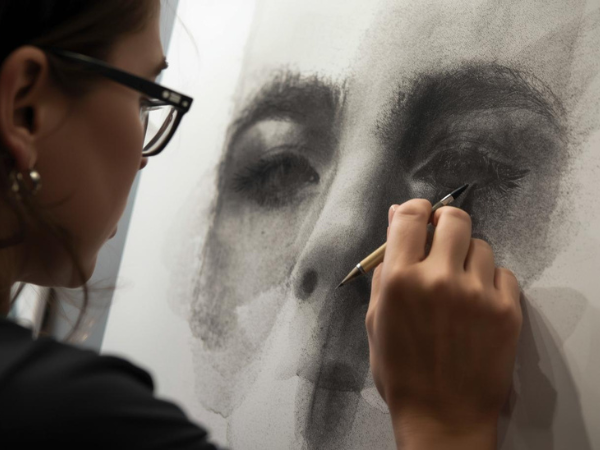
Charcoal drawing is one of the most expressive and versatile techniques available to young artists. Its ability to create deep shadows, soft gradients, and bold contrasts makes it a favorite medium in art classrooms. For high school students, mastering charcoal shading not only improves technical skills but also enhances creativity and confidence in visual storytelling.
Understanding Charcoal as a Medium
Charcoal is unique because it allows for both precision and freedom. Unlike pencils, it can produce rich blacks and subtle grays with minimal effort. High school artists should first understand how charcoal behaves on paper before attempting advanced shading.
- Types of Charcoal – Vine, compressed sticks, and charcoal pencils each offer different textures.
- Surface Interaction – Smooth paper creates lighter marks, while textured paper enhances depth.
- Pressure Control – Light strokes produce soft tones, while heavy strokes create bold shadows.
- Smudging Potential – Charcoal can be blended easily with fingers or tools.
- Erasability – Kneaded erasers lift charcoal without damaging paper.
By experimenting with these qualities, students learn how charcoal responds to touch and surface. This foundation is crucial for building shading techniques that look intentional rather than accidental. Understanding the medium is the first step toward mastering it.
Choosing the Right Tools for Shading
The tools used in charcoal shading greatly influence the outcome. High school artists should explore different options to find what suits their style best.
- Charcoal Pencils – Provide control for fine details.
- Compressed Charcoal Sticks – Offer bold, dark tones for dramatic shading.
- Vine Charcoal – Creates softer, lighter marks ideal for sketching.
- Blending Stumps – Smooth transitions between light and dark areas.
- Kneaded Erasers – Shape highlights and correct mistakes.
Each tool has a specific role in shading. For example, blending stumps help create smooth gradients, while compressed sticks are perfect for deep shadows. By combining tools, students can achieve a wide range of effects. Choosing the right tools ensures shading looks polished and professional, even in beginner artworks.
Mastering Light and Shadow
Shading is essentially the art of controlling light and shadow. High school artists must learn how light interacts with objects to create realistic drawings.
- Light Source Awareness – Identify where the light is coming from.
- Cast Shadows – Show how objects block light onto surfaces.
- Core Shadows – The darkest part of an object opposite the light source.
- Highlights – Bright spots where light directly hits.
- Reflected Light – Subtle illumination bouncing from nearby surfaces.
Understanding these elements helps students create depth and realism. By carefully observing how light falls on everyday objects, they can replicate it in their drawings. Mastering light and shadow transforms flat sketches into dynamic, three‑dimensional works of art.
Techniques for Smooth Blending
Blending is one of the most important skills in charcoal shading. It allows artists to transition seamlessly between tones.
- Finger Blending – Quick but less precise.
- Blending Stumps – Provide control and smoothness.
- Tissue or Cotton Pads – Create soft gradients.
- Layering – Build tones gradually for better blending.
- Cross‑Hatching with Blending – Combine line work with smudging.
Smooth blending prevents harsh lines and creates realistic textures. High school artists should practice blending on simple shapes like spheres or cubes before applying it to complex subjects. With patience, blending can elevate a drawing from amateur to professional quality.
Creating Depth with Layering
Layering is essential for adding dimension to charcoal drawings. Instead of relying on a single application, artists should build tones gradually.
- Light Base Layer – Start with soft strokes.
- Mid‑Tone Layer – Add medium pressure for depth.
- Dark Layer – Use compressed charcoal for bold shadows.
- Highlight Adjustments – Lift areas with a kneaded eraser.
- Final Touches – Blend layers for smooth transitions.
Layering allows students to control contrast and avoid flat drawings. It also gives flexibility to adjust tones as the artwork develops. By layering carefully, artists can create realistic textures and emphasize focal points in their compositions.
Using Erasers as Drawing Tools
Erasers are not just for correcting mistakes—they can be powerful shading tools.
- Kneaded Erasers – Shape highlights by lifting charcoal.
- Precision Erasers – Create fine details like hair or reflections.
- Subtractive Drawing – Remove charcoal to reveal light areas.
- Texture Creation – Dab erasers for rough surfaces.
- Highlight Enhancement – Brighten focal points for contrast.
High school artists often overlook erasers as creative tools. By using them strategically, they can add highlights and textures that make drawings more dynamic. Erasers help balance dark shading with bright accents, ensuring compositions feel complete.
Practicing Value Scales
A value scale is a simple exercise that trains artists to control shading. It involves creating a gradient from light to dark.
- Ten‑Step Scale – From pure white to deep black.
- Consistent Pressure Practice – Learn how pressure affects tone.
- Blending Exercises – Smooth transitions between values.
- Comparing Tools – Test pencils, sticks, and vine charcoal.
- Application to Shapes – Apply scales to spheres or cylinders.
Practicing value scales helps students understand tonal range. It builds confidence in controlling charcoal and prepares them for complex shading tasks. A strong grasp of values ensures drawings look balanced and realistic.
Avoiding Common Mistakes
Beginners often struggle with charcoal shading because of avoidable errors. Recognizing these mistakes helps students improve faster.
- Over‑Smudging – Creates muddy textures.
- Ignoring Light Source – Leads to unrealistic shading.
- Flat Tones – Lack of layering reduces depth.
- Excessive Pressure – Damages paper and limits blending.
- Neglecting Highlights – Makes drawings look dull.
By being mindful of these pitfalls, high school artists can refine their technique. Mistakes are part of learning, but awareness prevents them from becoming habits. With practice, shading becomes cleaner, more intentional, and visually appealing.
Building Confidence Through Practice
Confidence in shading comes from consistent practice. High school artists should dedicate time to experimenting with charcoal.
- Daily Sketches – Practice shading simple objects.
- Study from Life – Observe real light and shadow.
- Experiment with Tools – Try different blending methods.
- Challenge Projects – Attempt portraits or landscapes.
- Peer Feedback – Share work for constructive critique.
Practice builds muscle memory and artistic intuition. Over time, students will notice improvements in control, creativity, and confidence. Charcoal shading becomes less intimidating and more enjoyable, turning challenges into opportunities for growth.