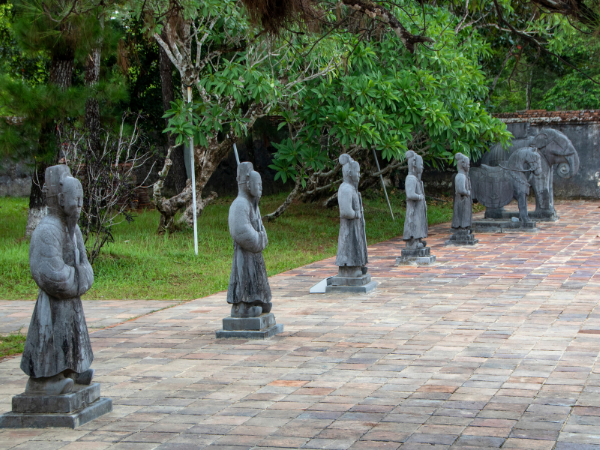
Memorial sculptures are more than stone and bronze; they are vessels of memory, emotion, and cultural identity. Across the world, artists have created monuments that embody grief, resilience, and hope. Each sculpture tells a story, often hidden beneath its surface, waiting to be discovered by those who pause to reflect. These works of art are not only tributes to individuals or events but also profound lessons in history and humanity.
The Vietnam Veterans Memorial in Washington, D.C.
The Vietnam Veterans Memorial is one of the most visited monuments in the United States. Designed by Maya Lin, it is a striking black granite wall inscribed with the names of over 58,000 soldiers who lost their lives or went missing during the Vietnam War. Its minimalist design was controversial at first, but it has since become a powerful symbol of sacrifice and remembrance.
- Reflective Surface – Visitors see their own reflection alongside the engraved names, merging past and present.
- Descending Pathway – The wall gradually sinks into the earth, symbolizing the descent into the war’s tragedy.
- Alphabetical and Chronological Names – Names are arranged to show the timeline of loss, emphasizing the human cost.
- Offerings Left Behind – Personal items left by visitors create a living archive of grief and memory.
- Healing Space – The design encourages quiet contemplation rather than grandiose celebration.
The hidden meaning lies in its simplicity: the wall is not about glorifying war but about acknowledging its human toll. It invites every visitor to confront history personally, making remembrance an intimate act.
The Motherland Calls in Volgograd, Russia
Towering over the city of Volgograd, The Motherland Calls is one of the tallest statues in the world. Built to commemorate the Battle of Stalingrad, it depicts a woman brandishing a sword, calling her people to defend their homeland. Its sheer scale and dramatic posture make it a breathtaking sight.
- Sword Raised High – Symbolizes both defense and victory.
- Dynamic Pose – The forward stride conveys urgency and determination.
- Female Figure – Represents Mother Russia, embodying strength and sacrifice.
- Location on Mamayev Kurgan – The site of fierce fighting, adding historical depth.
- Massive Scale – At 85 meters tall, it dwarfs visitors, emphasizing the enormity of sacrifice.
Beyond its grandeur, the statue’s hidden meaning is maternal protection. It is not just a warrior but a mother defending her children. This duality of nurturing and fighting reflects the resilience of the Russian people during one of history’s bloodiest battles.
The Memorial to the Murdered Jews of Europe in Berlin
This memorial, designed by architect Peter Eisenman, consists of 2,711 concrete slabs arranged in a grid. Walking through it is disorienting, as the slabs vary in height, creating a maze-like environment. It is a haunting tribute to the victims of the Holocaust.
- Concrete Slabs – Stark, cold, and uniform, symbolizing dehumanization.
- Maze-like Pathways – Visitors feel lost, echoing the confusion and fear of victims.
- Varying Heights – Creates a sense of instability and unpredictability.
- Open Design – No inscriptions, forcing personal interpretation.
- Underground Information Center – Provides historical context beneath the abstract surface.
The hidden meaning lies in the experience itself. The memorial does not tell visitors what to feel; instead, it immerses them in unease, mirroring the psychological terror of the Holocaust. It is a space where silence speaks louder than words.
The Taj Mahal in Agra, India
Though often seen as a romantic symbol, the Taj Mahal is also a memorial sculpture. Built by Emperor Shah Jahan in memory of his wife Mumtaz Mahal, it is a masterpiece of Mughal architecture, blending beauty with grief.
- White Marble – Represents purity and eternal love.
- Symmetry – Reflects balance and harmony, mirroring the couple’s bond.
- Calligraphy Inscriptions – Verses from the Quran emphasize spirituality.
- Gardens and Waterways – Symbolize paradise, offering peace to the departed.
- Central Dome – A celestial crown, elevating the tomb to divine status.
The hidden meaning is love transcending death. The Taj Mahal is not just a tomb but a testament to devotion, showing how memory can be immortalized in beauty. It is both a personal tribute and a universal symbol of enduring affection.
The Hiroshima Peace Memorial (Genbaku Dome)
Standing as a skeletal ruin, the Hiroshima Peace Memorial is a preserved building near the epicenter of the atomic bomb blast in 1945. It is a UNESCO World Heritage Site and a stark reminder of nuclear devastation.
- Ruined Dome – Left intentionally damaged to show destruction.
- Surrounding Park – A place of reflection and peace.
- Annual Ceremonies – Keep memory alive through collective mourning.
- Symbol of Resilience – Despite destruction, the structure endures.
- Global Message – Advocates for nuclear disarmament.
Its hidden meaning is resilience through tragedy. The dome is not rebuilt to perfection; instead, it stands broken, teaching future generations about the cost of war and the importance of peace.
The Angel of the North in Gateshead, England
This modern sculpture by Antony Gormley is a massive steel angel with wings spread wide. It overlooks the A1 motorway and has become a beloved landmark in northern England.
- Steel Construction – Represents industrial heritage.
- Wingspan of 54 Meters – Suggests protection and openness.
- Human Form – Connects spirituality with everyday life.
- Public Accessibility – Located in a common space, not hidden away.
- Contemporary Design – Blends tradition with modernity.
The hidden meaning is guardianship. The angel watches over the region, symbolizing both industrial strength and spiritual care. It bridges the past of labor with the future of hope.
The African Renaissance Monument in Dakar, Senegal
This colossal bronze statue depicts a man, woman, and child rising toward the sky. It was built to celebrate Africa’s emergence from colonialism and its aspirations for the future.
- Family Trio – Symbolizes unity and generational progress.
- Pointing Child – Represents hope and vision for tomorrow.
- Bronze Material – Suggests permanence and resilience.
- Height of 49 Meters – One of the tallest statues in Africa.
- Pan-African Message – Embodies pride and independence.
Its hidden meaning is rebirth. The monument is not just about history but about the future, showing Africa’s determination to rise and thrive despite past struggles.
The Pietà by Michelangelo in Vatican City
Michelangelo’s Pietà is a Renaissance masterpiece depicting Mary cradling the dead body of Jesus. Carved from marble, it is both tender and sorrowful, capturing the essence of maternal grief.
- Marble Medium – Smooth and pure, emphasizing divinity.
- Youthful Mary – Symbolizes eternal motherhood.
- Calm Expression – Reflects acceptance rather than despair.
- Detailed Anatomy – Shows Michelangelo’s mastery of human form.
- Sacred Location – Placed in St. Peter’s Basilica, enhancing its spiritual weight.
The hidden meaning is compassion. The sculpture transcends religious boundaries, embodying universal themes of loss, love, and human suffering. It is a reminder that grief can be both beautiful and profound.
The Cenotaph in London, England
The Cenotaph is a simple yet powerful memorial in Whitehall, London. It commemorates British and Commonwealth soldiers who died in World War I and subsequent conflicts.
- Minimalist Design – No ornamentation, emphasizing solemnity.
- Inscription “The Glorious Dead” – Honors sacrifice without glorifying war.
- Annual Remembrance Day Ceremonies – Keep memory alive through ritual.
- Central Location – Accessible to all, symbolizing collective mourning.
- Universal Symbolism – Represents all soldiers, not just individuals.
Its hidden meaning is humility. Unlike grand statues, the Cenotaph’s simplicity conveys respect without spectacle. It is a silent reminder that remembrance is about dignity, not grandeur.