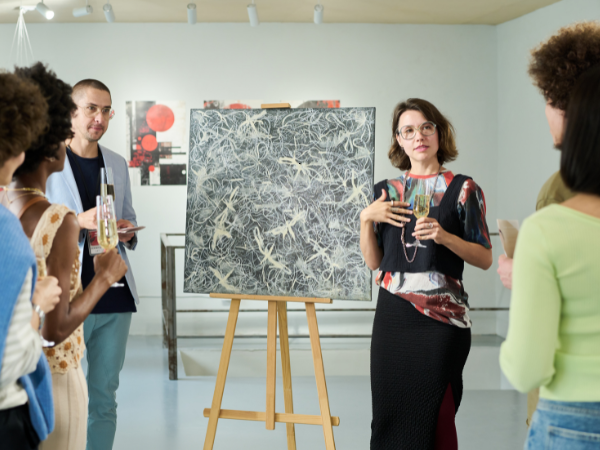
Exhibitions are powerful cultural platforms that shape how audiences experience art. Whether curated or open, they provide opportunities for artists to present their work, but the structure, intent, and outcomes differ significantly. Understanding these differences helps both artists and audiences navigate the art world more effectively. Below, we explore the nuances of curated and open exhibitions in detail.
What Defines a Curated Exhibition?
Curated exhibitions are carefully designed by curators or institutions to present a specific theme, narrative, or artistic vision. They are not random collections of artworks but structured experiences.
Key Features of Curated Exhibitions:
- Selection Process – Works are chosen by curators based on relevance to a theme.
- Cohesive Narrative – Artworks are arranged to tell a story or highlight a concept.
- Institutional Backing – Often hosted by museums, galleries, or cultural organizations.
- Professional Standards – Emphasis on presentation, lighting, and contextual information.
- Audience Engagement – Designed to provoke thought and dialogue around a central idea.
Curated exhibitions elevate the role of the curator as a mediator between artist and audience. They provide a polished, intentional experience that often carries academic or cultural weight. For artists, inclusion in a curated show can enhance credibility and visibility. For audiences, curated exhibitions offer depth, coherence, and intellectual engagement beyond simply viewing art.
What Defines an Open Exhibition?
Open exhibitions are inclusive platforms that welcome submissions from a wide range of artists, often without strict thematic or stylistic restrictions. They prioritize accessibility and diversity.
Key Features of Open Exhibitions:
- Open Call – Artists submit work regardless of background or reputation.
- Diversity – A wide range of styles, mediums, and perspectives are represented.
- Community Focus – Often organized by local art groups or societies.
- Democratic Selection – Sometimes juried, but often less restrictive than curated shows.
- Emerging Talent – Provides opportunities for new artists to gain exposure.
Open exhibitions democratize the art world by lowering barriers to entry. They allow audiences to experience a broad spectrum of creativity, from amateur to professional. For artists, they serve as stepping stones into the exhibition circuit, offering visibility and networking opportunities. While less polished than curated shows, open exhibitions celebrate inclusivity and grassroots creativity.
The Role of the Curator in Shaping Exhibitions
Curators are central to curated exhibitions, acting as interpreters and storytellers who shape how art is experienced. Their influence extends beyond selection to presentation and interpretation.
Curatorial Responsibilities:
- Theme Development – Establishing a guiding concept for the exhibition.
- Artist Selection – Choosing works that align with the narrative.
- Spatial Design – Arranging artworks to enhance flow and meaning.
- Contextualization – Providing labels, essays, and catalogs for deeper understanding.
- Audience Engagement – Designing programs, talks, and tours to enrich experience.
Curators transform exhibitions into intellectual journeys. Their expertise ensures that artworks are not just displayed but contextualized within broader cultural, historical, or social frameworks. This elevates the exhibition from a collection of works to a meaningful dialogue between art and society.
Accessibility and Inclusivity in Open Exhibitions
Open exhibitions prioritize accessibility, making them vital entry points for artists who may lack institutional connections. They embody inclusivity by welcoming diverse voices.
Inclusive Aspects of Open Exhibitions:
- Low Entry Barriers – Affordable submission fees or free participation.
- Wide Representation – Artists of different ages, backgrounds, and skill levels.
- Community Engagement – Local audiences connect with local creators.
- Educational Value – Encourages participation and learning for emerging artists.
- Networking Opportunities – Artists meet peers, collectors, and curators.
By embracing inclusivity, open exhibitions foster community spirit and encourage artistic experimentation. They provide audiences with a raw, unfiltered view of contemporary creativity. For artists, they serve as testing grounds for new ideas and styles, offering feedback and exposure that can shape future careers.
Artistic Freedom vs Thematic Direction
One of the most significant differences between curated and open exhibitions lies in artistic freedom versus thematic direction.
Comparison:
- Curated Exhibitions – Artists must align with a theme or concept.
- Open Exhibitions – Artists enjoy freedom to submit any work.
- Curated – Structured, cohesive, and narrative-driven.
- Open – Diverse, eclectic, and unpredictable.
- Curated – Often prestigious, with limited slots.
- Open – Broad participation, more democratic.
This distinction impacts both artists and audiences. Curated exhibitions provide depth and coherence but limit artistic freedom. Open exhibitions celebrate diversity and experimentation but may lack narrative focus. Both models serve important roles in the art ecosystem, balancing structure with openness.
Audience Experience in Curated vs Open Exhibitions
Audiences encounter different experiences depending on the exhibition type. Curated shows guide viewers through a structured journey, while open exhibitions offer variety and surprise.
Audience Perspectives:
- Curated – Offers intellectual engagement and thematic exploration.
- Open – Provides eclectic variety and unexpected discoveries.
- Curated – Often accompanied by catalogs, essays, and guided tours.
- Open – More informal, community-driven atmosphere.
- Curated – Appeals to academic, professional, and cultural audiences.
- Open – Attracts local communities and diverse demographics.
For audiences, curated exhibitions deliver depth and coherence, while open exhibitions offer inclusivity and spontaneity. Both experiences enrich cultural engagement, catering to different expectations and preferences.
Opportunities for Emerging Artists
Open exhibitions are particularly valuable for emerging artists, while curated exhibitions often favor established names.
Opportunities:
- Open – Entry-level exposure for new artists.
- Curated – Prestige and recognition for established artists.
- Open – Networking with peers and local communities.
- Curated – Access to collectors, critics, and institutions.
- Open – Encourages experimentation and risk-taking.
- Curated – Demands alignment with professional standards.
Emerging artists benefit from open exhibitions as stepping stones, while curated shows represent career milestones. Both pathways are essential for artistic growth, offering different forms of validation and visibility.
Professional Prestige vs Grassroots Creativity
Curated exhibitions often carry professional prestige, while open exhibitions highlight grassroots creativity.
Distinctions:
- Curated – Institutional recognition and cultural authority.
- Open – Community-driven and inclusive.
- Curated – Often international in scope.
- Open – Frequently local or regional.
- Curated – Structured, polished presentation.
- Open – Raw, diverse, and experimental.
Prestige and grassroots creativity are not mutually exclusive but complementary. Together, they sustain the art ecosystem by balancing institutional authority with community participation.
The Future of Exhibitions: Hybrid Models
Increasingly, exhibitions blend curated and open elements, creating hybrid models that combine structure with inclusivity.
Hybrid Features:
- Curated Themes – With open calls for submissions.
- Inclusive Selection – Combining established and emerging artists.
- Balanced Experience – Structured narrative with diverse voices.
- Community Engagement – Professional standards with grassroots participation.
- Digital Integration – Online platforms expanding accessibility.
Hybrid models reflect evolving cultural landscapes, embracing both professionalism and inclusivity. They ensure exhibitions remain relevant, dynamic, and accessible to diverse audiences while maintaining intellectual depth.
Conclusion: Why Both Models Matter
Curated and open exhibitions serve distinct but complementary roles in the art world. Curated shows provide structure, prestige, and intellectual engagement, while open exhibitions foster inclusivity, diversity, and grassroots creativity. Together, they sustain a balanced ecosystem that nurtures both established and emerging artists, offering audiences varied cultural experiences. The future lies in hybrid approaches that merge the strengths of both, ensuring exhibitions remain vibrant, accessible, and meaningful.


