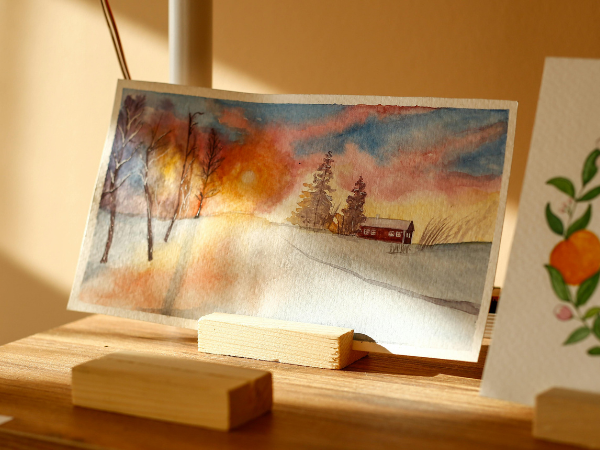
Watercolor painting is beloved for its transparency, fluidity, and ability to capture light in ways other mediums cannot. Unlike acrylics or oils, watercolors rely on the white of the paper to shine through, creating a luminous effect.
Understanding the Magic of Watercolors
Beginners should embrace the medium’s fluid nature rather than fight it. By practicing washes, blending, and layering, you’ll discover how watercolors can transform simple strokes into atmospheric skies, glowing flowers, or abstract textures. The magic lies in learning to control water while allowing it to surprise you.
Essential Supplies for Beginners
Starting with watercolor doesn’t require expensive tools, but choosing the right supplies makes learning easier. The three essentials are paper, brushes, and paints. Watercolor paper is thicker and textured to absorb water without buckling; beginners should start with 140 lb cold‑press paper. Brushes come in various shapes, but round brushes (sizes 6–10) are versatile for washes and details.
- Watercolor paper (140 lb cold‑press recommended)
- Round brushes (sizes 6–10)
- Flat brush for washes
- Student‑grade watercolor paints (pan or tube)
- Palette for mixing colors
Other helpful tools include masking tape to secure paper, jars of clean water, and paper towels for blotting. Beginners should avoid overbuying supplies; mastering a few basics is more effective than owning dozens of colors.
Setting Up Your Workspace
A comfortable workspace helps beginners focus on painting rather than struggling with logistics. Choose a flat, well‑lit surface where you can spread out materials. Natural light is ideal, but a desk lamp with a daylight bulb works well. Keep two water containers: one for rinsing brushes and one for clean water. Arrange paints and brushes within easy reach, and tape your paper to a board to prevent warping.
- Flat, stable surface
- Good lighting (natural or daylight bulb)
- Two water containers
- Taped paper to prevent buckling
- Organized palette and brushes
A tidy workspace reduces distractions and allows you to concentrate on technique. Beginners often underestimate the importance of preparation, but having everything ready makes painting smoother. Consider keeping a sketchbook nearby for practice strokes or color testing.
Basic Techniques Every Beginner Should Learn
Watercolor techniques form the foundation of painting. Beginners should practice washes, gradients, and layering. A flat wash involves covering the paper evenly with diluted paint, while a graded wash transitions from dark to light. Wet‑on‑wet technique creates soft blends by applying paint to damp paper, while wet‑on‑dry produces sharper edges.
- Flat wash for backgrounds
- Graded wash for skies or shading
- Wet‑on‑wet for soft blends
- Wet‑on‑dry for crisp details
- Layering to build depth
Practicing these techniques repeatedly builds confidence. Beginners should experiment with different water ratios to see how pigment spreads. Don’t worry about creating finished paintings at first; focus on mastering control of water and brush. These exercises are the building blocks for landscapes, florals, and abstract art.
Step‑by‑Step First Painting Project
Your first watercolor project should be simple yet rewarding. A sunset sky is ideal because it uses washes and blending. Start by wetting the paper with clean water. Apply a graded wash of warm colors—yellow at the bottom, transitioning to orange and red.
- Wet paper for smooth blending
- Apply yellow wash at horizon
- Transition to orange and red
- Add purple or blue at top
- Let colors merge softly
This project teaches control of water and layering. Beginners will see how colors interact and how timing affects blending. The result is a luminous sky that feels atmospheric even with minimal detail. Completing a simple project builds confidence and motivates further exploration.
Common Mistakes and How to Avoid Them
Beginners often face challenges with watercolors. Using too much water can cause puddles and uneven drying. Overworking areas leads to muddy colors. Skipping quality paper results in buckling and poor absorption.
- Too much water causes puddles
- Overworking creates muddy colors
- Cheap paper warps easily
- Ignoring drying times smudges layers
- Using too many colors overwhelms composition
To avoid these mistakes, practice restraint. Allow layers to dry before adding more paint. Use fewer colors and focus on harmony. Invest in decent paper to improve results. Remember, watercolor thrives on simplicity and patience.
Building Confidence Through Practice
Confidence grows with repetition. Beginners should paint small studies rather than large, complex works. Practice gradients, simple shapes, and color mixing daily. Keep a sketchbook dedicated to watercolor exercises.
- Daily practice builds skill
- Small studies reduce pressure
- Sketchbook for experiments
- Focus on color harmony
- Celebrate progress
Confidence comes from seeing improvement over time. Beginners should embrace mistakes as learning opportunities. By practicing consistently, you’ll develop muscle memory for brush control and water ratios.
Exploring Styles and Subjects
Watercolor is versatile, allowing exploration of landscapes, florals, portraits, and abstracts. Beginners should try different subjects to discover preferences. Landscapes teach washes and layering, florals emphasize detail and blending, while abstracts encourage freedom.
- Landscapes for washes
- Florals for blending
- Portraits for shading
- Abstracts for experimentation
- Mixed media for creativity
Exploring styles prevents stagnation and keeps learning exciting. Beginners should not limit themselves to one subject. Experimentation broadens skills and inspires creativity.
Continuing Your Watercolor Journey
Watercolor learning never ends. Beginners can progress by studying tutorials, joining workshops, and practicing regularly. Online resources and communities provide guidance and inspiration.
- Tutorials for structured learning
- Workshops for hands‑on practice
- Online communities for feedback
- Regular practice for growth
- Experimentation for creativity
Continuing the journey means embracing watercolor as a lifelong skill. Beginners should set goals, such as completing a series of paintings or mastering specific techniques.