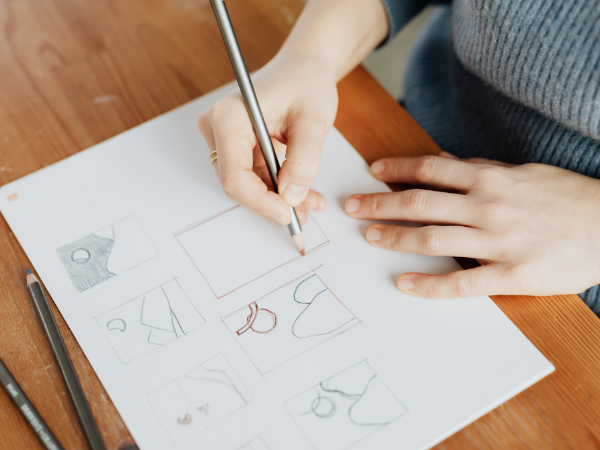
Drawing is a skill that can be developed with consistent practice, patience, and the right techniques. Sketching, in particular, is the foundation of most artistic work, allowing artists to capture ideas quickly and refine them into polished pieces. Whether you are a beginner or an experienced artist, learning effective sketching tips can dramatically improve your drawing skills and help you express creativity more freely.
Understanding the Basics of Sketching
Sketching begins with mastering the fundamentals. Before diving into complex illustrations, it’s important to understand how lines, shapes, and proportions work together to form a drawing. A sketch is not meant to be perfect; it’s a rough representation of an idea. By focusing on the basics, you build a strong foundation that supports more advanced techniques later.
- Line control – Practice straight, curved, and varied lines to improve precision.
- Shapes practice – Circles, squares, and triangles are the building blocks of all drawings.
- Proportions – Learn how different elements relate in size and placement.
- Observation – Train your eye to notice details in everyday objects.
- Gesture drawing – Quick sketches that capture movement and posture.
By consistently practicing these basics, you’ll notice that your sketches become more accurate and expressive. The goal is not perfection but confidence in your strokes and ideas.
Choosing the Right Tools for Sketching
The tools you use can influence the quality of your sketches. While expensive supplies aren’t necessary, having the right materials ensures smoother practice and better results. Beginners often overlook the importance of tools, but they play a crucial role in comfort and efficiency.
- Pencils – Graphite pencils range from hard (H) to soft (B), offering different shading options.
- Paper – Choose sketchbooks with medium texture to balance smoothness and grip.
- Erasers – Kneaded erasers are flexible and ideal for light corrections.
- Sharpeners – A sharp pencil ensures clean lines and better control.
- Blending tools – Stumps or tissues help create smooth shading effects.
Selecting tools that suit your style makes sketching more enjoyable. Over time, you’ll develop preferences for certain materials that enhance your workflow.
Practicing Daily Sketches
Consistency is key to improvement. Setting aside time each day for sketching helps you build muscle memory and confidence. Even short sessions can make a big difference in your progress.
- Sketch warm-ups – Start with simple lines and shapes to loosen your hand.
- Timed sketches – Challenge yourself with quick drawings to improve speed.
- Object studies – Focus on everyday items to refine observation skills.
- Character doodles – Experiment with figures and expressions.
- Nature sketches – Trees, leaves, and landscapes are great for practice.
Daily sketching doesn’t need to be complex. The habit itself strengthens your artistic discipline and keeps creativity flowing.
Improving Hand-Eye Coordination
Hand-eye coordination is essential for accurate sketches. It allows you to translate what you see into precise movements on paper. Improving this skill requires deliberate exercises that connect observation with execution.
- Blind contour drawing – Draw without looking at the paper to sharpen observation.
- Copying references – Replicate photos or artworks to train accuracy.
- Tracing exercises – Trace shapes to understand proportions and flow.
- Mirror drawing – Sketch symmetrical objects to balance both sides.
- Speed drawing – Quick sketches force your brain and hand to sync faster.
With regular practice, your sketches will look more natural and fluid, reflecting improved coordination.
Learning Shading Techniques
Shading adds depth and realism to sketches. Understanding how light interacts with objects helps you create more dynamic and lifelike drawings. Beginners often struggle with shading, but mastering it transforms flat sketches into dimensional art.
- Hatching – Parallel lines that create tonal variation.
- Cross-hatching – Overlapping lines for darker tones.
- Stippling – Dots used to build texture and depth.
- Blending – Smooth transitions using blending tools.
- Gradient practice – Exercises to control light-to-dark transitions.
Shading requires patience, but once mastered, it elevates sketches from simple outlines to expressive works of art.
Using References Effectively
References are powerful tools for learning. They provide guidance on proportions, anatomy, and perspective. However, using references correctly is crucial to avoid dependency and encourage creativity.
- Photo references – Images help capture realistic details.
- Live models – Observing people or animals improves dynamic sketching.
- Art studies – Copying master artworks teaches technique.
- Environment sketches – Drawing surroundings enhances perspective skills.
- Memory sketches – Practice recalling details without references.
Balancing reference use with imagination ensures growth as an artist while maintaining originality.
Exploring Different Styles of Sketching
Sketching is versatile, and experimenting with styles helps you discover your artistic identity. Each style emphasizes different techniques and aesthetics, allowing you to expand your skill set.
- Realism – Focuses on lifelike accuracy and detail.
- Cartooning – Simplified forms with exaggerated features.
- Abstract sketching – Emphasizes shapes and emotions over realism.
- Minimalist sketching – Uses fewer lines for clean compositions.
- Concept art – Rough sketches that develop creative ideas.
Exploring styles keeps sketching exciting and helps you adapt to different artistic projects.
Building Confidence in Your Sketches
Confidence is often the biggest barrier for beginners. Many hesitate to sketch because they fear mistakes. However, sketching thrives on imperfection—it’s about capturing ideas, not producing flawless art.
- Positive mindset – Accept mistakes as part of learning.
- Sketch journaling – Keep a daily sketchbook to track progress.
- Sharing art – Post sketches to gain feedback and encouragement.
- Redrawing – Compare old and new sketches to see improvement.
- Experimentation – Try new techniques without fear of failure.
Confidence grows with practice and self-acceptance. The more you sketch, the more comfortable you’ll feel expressing creativity.
Developing Your Unique Artistic Voice
Ultimately, sketching is about finding your own style and voice. While learning techniques is essential, your individuality shines through in how you apply them. Developing a unique artistic voice takes time but makes your work stand out.
- Personal themes – Explore subjects that resonate with you.
- Signature strokes – Develop line styles that define your sketches.
- Color integration – Experiment with adding color to sketches.
- Storytelling – Use sketches to convey emotions or narratives.
- Consistency – Maintain stylistic elements across your work.
Your artistic voice is what makes your sketches truly yours. Embrace experimentation, and over time, your style will naturally evolve.