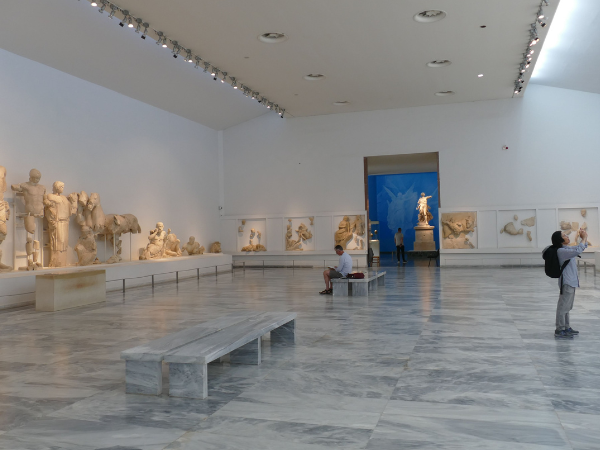
Italy is home to some of the world’s most extraordinary museums, where centuries of artistic genius are preserved. From Renaissance masterpieces to Baroque marvels and modern innovations, these institutions offer travelers a chance to immerse themselves in the country’s cultural soul. Below are nine of the best museums, each described in detail with unique text, lists, and insights.
Vatican Museums, Rome
The Vatican Museums are among the most visited cultural institutions in the world, housing treasures collected by Popes over centuries. Visitors encounter ancient sculptures, Renaissance frescoes, and the legendary Sistine Chapel ceiling painted by Michelangelo. The museums span more than four miles of galleries, making them a labyrinth of art and history.
- Sistine Chapel ceiling by Michelangelo
- Raphael Rooms with Renaissance frescoes
- Museo Pio-Clementino’s classical sculptures
- Gallery of Maps with detailed cartography
- Caravaggio’s Entombment of Christ
A visit here is not just about seeing art; it’s about experiencing the heartbeat of Western civilization. Arriving early ensures a quieter view of the Sistine Chapel, while guided tours provide deeper context. The Vatican Museums embody the fusion of faith and creativity, making them a must-see for any art lover.
Uffizi Gallery, Florence
Florence, the birthplace of the Renaissance, is home to the Uffizi Gallery, one of the most famous museums in the world. Its collection showcases the evolution of Italian painting, sculpture, and architecture, with works spanning centuries.
- Botticelli’s Birth of Venus and Primavera
- Leonardo da Vinci’s early works
- Michelangelo’s Doni Tondo
- Giotto and Cimabue’s medieval paintings
- Raphael’s portraits
The Uffizi is not only about the art inside but also the building itself, which offers stunning views of Florence. Crowds are common, so pre-booking tickets is essential. Spending two to three hours here allows visitors to appreciate the masterpieces that shaped European art. The Uffizi remains a living testament to Florence’s role as the cradle of creativity.
Galleria dell’Accademia, Florence
The Galleria dell’Accademia is best known as the home of Michelangelo’s David, one of the most iconic sculptures in history. Beyond this masterpiece, the museum houses a rich collection of Renaissance art and musical instruments.
- Michelangelo’s David
- Michelangelo’s unfinished Prisoners
- Florentine Gothic paintings
- Historic musical instruments
- 15th-century religious art
The museum provides insight into Michelangelo’s creative process, especially through his unfinished works. Visitors can see how the artist envisioned figures emerging from marble. The Accademia is smaller than the Uffizi, making it easier to navigate, but its impact is monumental. It offers an intimate look at Renaissance genius and remains a highlight of any trip to Florence.
Galleria Borghese, Rome
Nestled in the Villa Borghese gardens, the Galleria Borghese is a jewel of Baroque art. Its collection emphasizes sculpture and painting, with works by Bernini, Caravaggio, and Titian.
- Bernini’s Apollo and Daphne
- Bernini’s David
- Caravaggio’s Boy with a Basket of Fruit
- Titian’s Sacred and Profane Love
- Raphael’s Deposition
The museum’s intimate setting allows visitors to appreciate masterpieces up close. Reservations are mandatory, ensuring a controlled flow of guests. The Borghese Gallery is not just about art—it’s about experiencing the drama and emotion of the Baroque era. Its sculptures, in particular, seem alive, capturing motion and passion in marble.
Museo Cappella Sansevero, Naples
The Museo Cappella Sansevero is one of Naples’ most fascinating sites, blending art, science, and mystery. Its centerpiece is the Veiled Christ, a marble sculpture so delicate it appears like real fabric.
- Veiled Christ by Giuseppe Sanmartino
- Anatomical Machines (18th-century models)
- Baroque frescoes and decorations
- Sculptures of noble patrons
- Symbolic religious art
The chapel reflects the eccentric vision of Prince Raimondo di Sangro, who combined artistic patronage with scientific curiosity. Visitors are often struck by the lifelike quality of the Veiled Christ, considered one of the greatest sculptures ever created. The Sansevero Chapel is a hidden gem that reveals Naples’ unique blend of spirituality and innovation.
Castel Sant’Angelo, Rome
Originally built as a mausoleum for Emperor Hadrian, Castel Sant’Angelo evolved into a fortress, papal residence, and museum. Its collection spans centuries of Roman history and art.
- Ancient Roman artifacts
- Renaissance frescoes
- Papal apartments
- Military weapons and armor
- Panoramic rooftop views
The castle’s circular design and strategic location near the Vatican make it both a historical and artistic landmark. Visitors can explore its layered history, from imperial Rome to papal power. The rooftop offers breathtaking views of Rome, making Castel Sant’Angelo a cultural experience that combines art, history, and architecture.
Peggy Guggenheim Collection, Venice
Venice’s Peggy Guggenheim Collection is Italy’s premier modern art museum. Housed in the Palazzo Venier dei Leoni, it showcases 20th-century masterpieces.
- Works by Picasso
- Surrealist art by Dalí
- Abstract pieces by Kandinsky
- Sculptures by Brancusi
- Jackson Pollock’s drip paintings
The museum reflects Guggenheim’s personal passion for modern art, offering visitors a journey through avant-garde movements. Its location on the Grand Canal adds to its charm. The collection bridges Italy’s classical heritage with modern creativity, making it essential for those interested in contemporary culture.
Museo Egizio, Turin
The Museo Egizio is the world’s oldest museum dedicated entirely to Egyptian civilization. Its collection rivals that of Cairo, making it a unique cultural treasure in Italy.
- Ancient mummies
- Sarcophagi and funerary art
- Papyrus manuscripts
- Statues of pharaohs
- Everyday artifacts from ancient Egypt
Founded in the 19th century, the museum highlights Italy’s role in Egyptology. Visitors gain insight into the daily life, religion, and art of ancient Egypt. The Museo Egizio is not only about archaeology but also about connecting Italy’s scholarly tradition with global heritage.
MAXXI – National Museum of 21st Century Arts, Rome
MAXXI represents Italy’s commitment to contemporary creativity. Designed by architect Zaha Hadid, the museum is a striking example of modern architecture.
- Contemporary paintings
- Multimedia installations
- Photography collections
- Architectural exhibitions
- Rotating international shows
The museum emphasizes innovation, offering a platform for emerging artists. Its dynamic design reflects the fluidity of modern art. MAXXI is a reminder that Italy’s cultural story continues into the present, blending tradition with experimentation.


