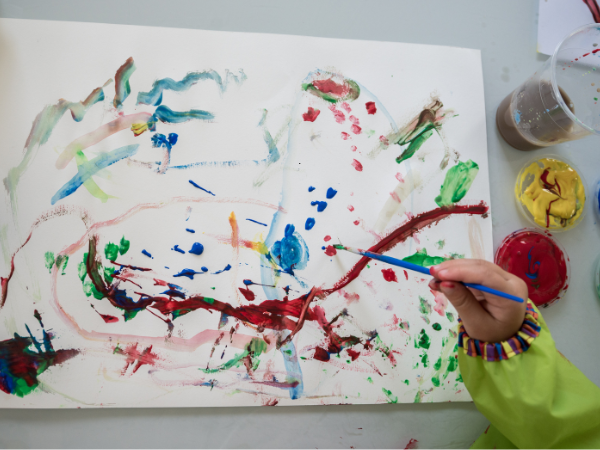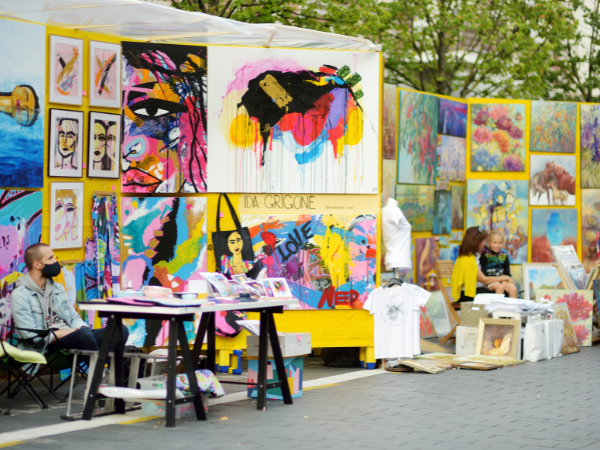
Paintings that rely on a limited color palette often stand out for their striking simplicity and emotional depth. Instead of overwhelming the viewer with a spectrum of hues, these works use carefully chosen tones to highlight form, contrast, and atmosphere. From ancient frescoes to modern minimalism, artists have long experimented with restricted palettes to achieve powerful visual effects. This approach can make a painting feel timeless, meditative, or even haunting, depending on how the colors are applied.
What Are Limited Color Palette Paintings?
A limited color palette painting is one in which the artist intentionally restricts the number of colors used. Rather than employing dozens of pigments, the artist may rely on just two or three shades to construct the entire composition. This technique emphasizes tonal harmony and forces the viewer to focus on texture, shape, and emotional resonance rather than sheer variety.
- Monochrome works – Paintings created with a single dominant color.
- Duo-tone pieces – Works that rely on two contrasting or complementary colors.
- Neutral palette art – Paintings using blacks, whites, and grays with subtle accents.
- Minimalist abstracts – Modern works that strip color down to essentials.
- Traditional ink art – East Asian works often using black ink with minimal color.
By narrowing the palette, artists create cohesion and intensity. The viewer’s eye is drawn to subtle variations in tone and brushwork, making the experience more contemplative and focused.
Why Do Artists Use Only a Few Colors?
Artists often choose limited palettes for both practical and expressive reasons. Historically, pigments were expensive or difficult to obtain, so painters worked with what was available. In modern times, the choice is often deliberate, meant to evoke mood or highlight form.
- Cost and availability – Early artists had limited access to pigments.
- Emotional focus – Restricting colors intensifies the emotional impact.
- Stylistic clarity – A few colors create a clean, unified aesthetic.
- Symbolic meaning – Certain colors carry cultural or spiritual significance.
- Experimentation – Artists test how far they can push expression with fewer tools.
Ultimately, the decision to limit colors is about control. By narrowing the palette, artists guide the viewer’s emotional response and emphasize the essence of the subject.
Famous Paintings with Only a Few Colors
Throughout history, several iconic works have relied on minimal palettes to achieve greatness. These paintings prove that fewer colors can sometimes deliver more impact than a rainbow of pigments.
- Picasso’s Blue Period – Works dominated by shades of blue, conveying melancholy.
- Kazimir Malevich’s Black Square – A radical monochrome that redefined modern art.
- Mark Rothko’s Color Fields – Large blocks of limited hues designed to evoke emotion.
- Yves Klein’s Blue Monochromes – Entire canvases painted in International Klein Blue.
- Chinese ink landscapes – Minimalist works using black ink with subtle washes.
These examples demonstrate how restraint can lead to innovation. By stripping away excess, artists reveal the raw power of color itself.
How a Limited Color Palette Creates Mood and Emotion
Colors are deeply tied to human psychology, and limiting them can heighten emotional resonance. A painting dominated by blues may feel calm or sorrowful, while one in reds may evoke passion or danger.
- Blue tones – Associated with sadness, serenity, or introspection.
- Red dominance – Evokes intensity, love, or violence.
- Black and white – Suggests timelessness, purity, or stark contrast.
- Earth tones – Grounded, natural, and calming.
- Gray palettes – Often linked to ambiguity, subtlety, or melancholy.
By carefully choosing just a few colors, artists can manipulate atmosphere and guide the viewer’s emotional journey through the artwork.
Artists Known for Minimal Color Palettes
Some artists are celebrated specifically for their mastery of restricted palettes. Their works prove that simplicity can be as powerful as complexity.
- Kazimir Malevich – Pioneer of Suprematism, known for stark geometric forms.
- Yves Klein – Famous for his patented International Klein Blue.
- Mark Rothko – Used large fields of limited colors to evoke spirituality.
- Agnes Martin – Minimalist grids with subtle tonal variations.
- Ellsworth Kelly – Bold blocks of color with restrained palettes.
These artists demonstrate that mastery lies not in abundance but in precision. Their works continue to inspire contemporary painters and designers.
Famous Monochromatic and Near-Monochromatic Paintings
Monochromatic art focuses on a single hue, while near-monochromatic works introduce subtle variations. Both approaches highlight the expressive potential of limited palettes.
- Whistler’s Nocturnes – Atmospheric works dominated by blues and grays.
- Ad Reinhardt’s Black Paintings – Subtle variations within a nearly black canvas.
- Josef Albers’ Homage to the Square – Geometric studies of color interaction.
- Cy Twombly’s chalk-like works – Minimalist scribbles on muted backgrounds.
- Chinese calligraphy scrolls – Black ink compositions with restrained elegance.
These works prove that even a single color can carry infinite meaning when applied with skill.
How to Appreciate Paintings with Simple Color Schemes
Appreciating limited palette paintings requires slowing down and noticing subtleties. Instead of being dazzled by variety, viewers must tune into tone, texture, and emotional resonance.
- Observe brushwork – With fewer colors, technique becomes more visible.
- Notice tonal shifts – Subtle changes in shade carry meaning.
- Consider symbolism – Colors often carry cultural or spiritual weight.
- Feel the mood – Limited palettes intensify atmosphere.
- Compare across eras – See how different cultures used restricted palettes.
By engaging deeply, viewers discover that simplicity can be profound. Limited palette paintings invite contemplation and reward patience with emotional depth.