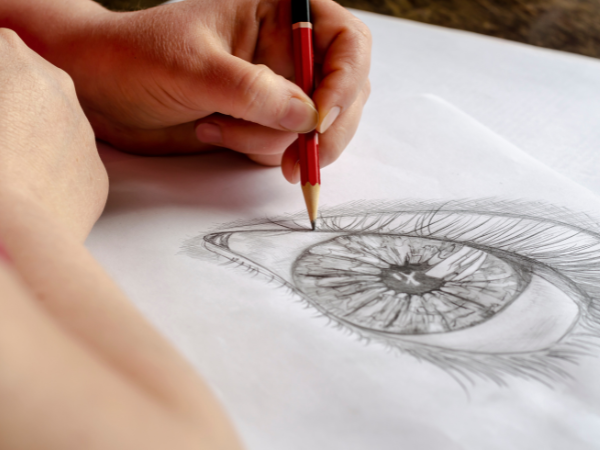
Understanding how to draw textures is essential for artists who want to bring realism and depth to their work. Textures like wood, metal, and fabric each have unique visual qualities that require different techniques to capture accurately. By studying how light interacts with these surfaces and practicing specific shading methods, artists can create convincing illustrations that feel tactile and lifelike. This guide explores the fundamentals of drawing these three textures, offering practical tips and structured approaches to help you refine your skills.
The Importance of Texture in Drawing
Texture adds realism and dimension to artwork, transforming flat sketches into immersive visuals. Without texture, drawings often appear unfinished or overly simplistic. By mastering texture, artists can convey material properties, weight, and atmosphere.
Key Points About Texture:
- Defines the surface quality of objects
- Enhances realism and depth in drawings
- Communicates material differences (rough vs. smooth)
- Guides viewer perception and emotional response
- Requires observation and practice to master
Texture is more than a technical skill—it’s a storytelling tool. Whether you’re sketching a rustic wooden table, a polished metal sculpture, or soft drapery, texture helps the viewer instantly recognize the material and connect with the artwork.
Drawing Wood Texture: Grain, Knots, and Roughness
Wood is one of the most common textures in art, characterized by grain patterns, knots, and subtle imperfections. Capturing wood requires attention to directional lines and tonal variation.
Techniques for Wood Texture:
- Use long, parallel strokes to mimic grain
- Add irregular knots for authenticity
- Vary shading to show rough vs. polished surfaces
- Employ cross-hatching for aged or weathered wood
- Blend lightly for smooth, varnished finishes
By layering strokes and adjusting pressure, artists can replicate the organic feel of wood. Observing real wooden surfaces helps identify subtle variations in tone and grain direction, making drawings more convincing.
Drawing Metal Texture: Shine, Reflection, and Hardness
Metal surfaces are defined by their reflective qualities and sharp highlights. Unlike wood, metal requires precise control of contrast to capture its polished or matte finish.
Techniques for Metal Texture:
- Strong highlights to indicate reflection
- Smooth shading transitions for polished surfaces
- Sharp contrasts for chrome or steel
- Use curved strokes to follow object shape
- Add subtle imperfections for realism
Metal textures demand careful observation of light sources. By exaggerating highlights and shadows, artists can create the illusion of reflective surfaces that feel solid and durable.
Drawing Fabric Texture: Softness, Folds, and Flow
Fabric introduces movement and softness into drawings. Capturing fabric requires attention to folds, drapery, and how light interacts with creases.
Techniques for Fabric Texture:
- Use curved lines to depict folds
- Layer shading for depth in creases
- Blend smoothly for soft materials like silk
- Apply rough strokes for coarse fabrics like burlap
- Observe how fabric interacts with gravity
Fabric textures allow artists to explore fluidity and rhythm. By varying shading intensity, you can show whether fabric is lightweight and flowing or heavy and structured.
Observing Real-Life Textures for Accuracy
Observation is the foundation of texture drawing. Studying real materials helps artists understand how light, shadow, and detail define surfaces.
Observation Tips:
- Examine objects under different lighting
- Note variations in tone and reflection
- Sketch quick studies of surfaces
- Compare smooth vs. rough materials
- Practice translating observations into strokes
Observation sharpens artistic perception. By analyzing real-world textures, artists can replicate them more convincingly in their work.
Shading Techniques for Realistic Textures
Shading is essential for creating depth and realism in textures. Different materials require unique shading approaches to capture their qualities.
Shading Methods:
- Cross-hatching for rough surfaces
- Smooth blending for polished finishes
- Stippling for grainy or porous textures
- Gradient shading for reflective materials
- Layered tones for complex fabrics
Mastering shading allows artists to move beyond outlines, giving drawings a three-dimensional feel. Consistent practice builds confidence in rendering diverse textures.
Common Mistakes When Drawing Textures
Artists often struggle with textures due to over-detailing or inconsistent shading. Recognizing common mistakes helps improve technique.
Mistakes to Avoid:
- Using uniform strokes for varied surfaces
- Ignoring light source direction
- Overloading details without structure
- Neglecting tonal contrast
- Forgetting material-specific qualities
Avoiding these pitfalls ensures textures remain believable. Balanced detail and thoughtful shading create stronger, more realistic drawings.
Practicing Texture Drawing Step by Step
Practice is the key to mastering textures. Structured exercises help artists build confidence and refine technique.
Practice Exercises:
- Draw wood planks with varied grain patterns
- Sketch metallic spheres under different lighting
- Render fabric folds in multiple positions
- Experiment with shading methods on sample surfaces
- Compare results with real-life references
Step-by-step practice builds muscle memory and sharpens observation skills. Over time, artists develop a personal style while maintaining accuracy.
Combining Textures in a Single Composition
Realistic artwork often requires multiple textures in one piece. Combining wood, metal, and fabric creates dynamic compositions that challenge artists to balance techniques.
Combination Tips:
- Contrast smooth metal with rough wood
- Use fabric to add softness against hard surfaces
- Adjust shading intensity for material differences
- Ensure consistent light source across textures
- Practice blending transitions between materials
Combining textures enhances storytelling in art. By mastering how different surfaces interact, artists can create visually rich and compelling compositions.