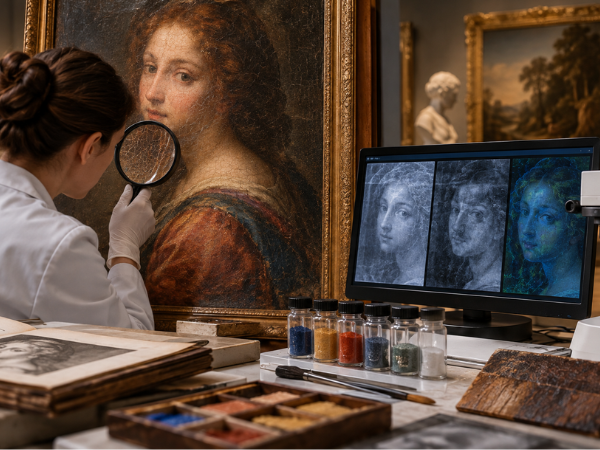
A painting can look completely authentic and still be a forgery. Museums and art experts use a combination of historical research, visual examination, and scientific testing to determine whether a work is genuine.
Why Do Museums Suspect a Painting Is Fake?
Museums may begin questioning a painting when something does not match the known history or characteristics of the work. The first warning signs are often discovered before any laboratory testing takes place.
Experts may notice unusual brushwork, an inconsistent signature, suspicious aging, or materials that were not available during the artist’s lifetime. A painting with an unclear ownership history can also attract additional attention.
Common warning signs include:
- An unexplained gap in the painting’s provenance
- A signature that differs from the artist’s known examples
- Unusual colors or painting techniques
- Materials inconsistent with the supposed date
- Signs of artificial aging
- Previous restoration that hides important details
- A sudden appearance on the art market without a convincing history
These clues do not automatically prove that a painting is fake. They simply indicate that further investigation may be necessary.
Provenance and the History Behind a Painting
Provenance is the documented history of ownership and movement of an artwork. It can provide important evidence about where a painting has been and who owned it over time.
Researchers may examine auction records, museum catalogs, exhibition archives, estate documents, old photographs, sales receipts, and correspondence. A strong provenance can connect a painting to a specific period, collection, dealer, or exhibition.
However, provenance is not the same as proof of authenticity. Historical records can be incomplete, and forged documentation can sometimes accompany a forged artwork.
| Evidence | What experts look for |
|---|---|
| Ownership records | Previous owners and dates |
| Auction catalogs | Earlier descriptions or reproductions |
| Exhibition records | Where and when the work was displayed |
| Old photographs | Appearance of the painting in the past |
| Artist archives | References to the work or its creation |
The strongest authentication usually comes when provenance agrees with the physical and scientific evidence.
Comparing Style, Technique, and Artist’s Signature
Art historians often begin with the painting itself. They compare its composition, brushwork, colors, perspective, and details with authenticated works by the same artist.
An artist’s technique can be surprisingly difficult to reproduce convincingly. The way paint is applied, layered, blended, or left visible may reveal differences that are difficult to notice at first glance.
The signature is also examined, but it should not be treated as decisive evidence. A skilled forger can copy a signature, while an authentic signature can sometimes be added to an older or altered painting.
Experts may compare:
- Brushstroke patterns
- Composition and proportions
- Color choices
- Paint thickness and layering
- Drawing beneath the paint
- Signature placement and characteristics
- Repeated artistic habits
Digital imaging and databases of authenticated works can also help specialists make detailed comparisons.
X-Rays Reveal What Lies Beneath the Surface
X-ray imaging allows researchers to look beyond the visible surface of a painting. It can reveal information about the layers underneath the final image.
Different pigments and materials absorb X-rays differently, creating an image of hidden structures. Experts may discover earlier compositions, alterations, repairs, or changes made during the painting process.
For example, an X-ray may reveal that a supposed historical painting contains an underlying image painted in a completely different composition. That does not automatically mean the work is fake, because artists sometimes changed their compositions while working.
The important question is whether the hidden evidence is consistent with the artist and period associated with the painting.
How Pigment Tests Expose Modern Paint
Pigment analysis is one of the most useful scientific approaches to detecting an art forgery.
Researchers can examine tiny samples of paint or, when possible, use non-invasive analytical techniques. They look at the chemical and physical characteristics of pigments and compare them with materials known to have been available during the supposed period.
This becomes particularly important when a painting is attributed to an artist who lived centuries ago.
If a supposedly old painting contains a synthetic pigment developed only after the artist’s death, that creates a serious authenticity problem.
Common questions include:
- Was the pigment available during the artist’s lifetime?
- Does its chemical composition match historical examples?
- Is it used in a way consistent with the artist’s technique?
- Does the pigment appear only in later restoration areas or in the original paint?
Pigment analysis is most useful when combined with art historical and material evidence rather than used in isolation.
Infrared and Ultraviolet Imaging in Art Authentication
Different wavelengths of light can reveal details that are invisible under normal lighting.
Infrared imaging can sometimes expose underdrawings, changes in composition, or details hidden beneath layers of paint. This can help researchers understand how an artwork was constructed.
Ultraviolet light is particularly useful for examining varnish and restoration. Different materials can fluoresce differently under ultraviolet illumination, helping conservators identify areas that have been retouched or repaired.
These imaging techniques can help answer questions about a painting’s history without necessarily removing any material from the artwork.
Canvas, Wood, and Other Material Clues
The surface supporting a painting can provide another layer of evidence. Experts examine materials such as canvas, wood panels, adhesives, ground layers, and varnishes.
For paintings on wood, researchers may analyze the type of wood and sometimes study its growth rings through dendrochronology. This can help establish whether the panel could have existed during the claimed period.
Canvas can also provide useful clues. The weave, fibers, preparation, and construction may be compared with materials associated with a particular time or region.
Material evidence can include:
- Canvas fiber and weave
- Wood species and growth-ring patterns
- Ground and preparation layers
- Varnish and binding materials
- Nails, tacks, or other construction details
- Signs of aging and previous restoration
A material that clearly postdates the supposed creation of a painting can raise significant doubts about its authenticity.
Can Experts Detect Changes Made by Forgers?
Yes, but detecting deliberate alterations can be challenging. Forgers may try to make a painting appear older by manipulating its surface, adding artificial cracks, applying aged varnish, or modifying existing artwork.
Experts therefore look for inconsistencies between different parts of the painting. Artificial aging may produce patterns that do not behave like naturally aged materials.
For example, cracks in an old painting develop through physical and environmental processes over many years. Artificially created craquelure may look convincing at first but can show differences under magnification or scientific imaging.
A painting may also contain a mixture of old and new materials. An old canvas does not necessarily mean the image painted on it is old.
How Different Tests Work Together
No single technique is usually enough to authenticate a complex artwork. Museums combine multiple types of evidence to build a more complete picture.
| Method | What it can reveal |
|---|---|
| Provenance research | Ownership and exhibition history |
| Style analysis | Consistency with the artist’s known work |
| X-ray imaging | Hidden layers and structural changes |
| Pigment analysis | Age and composition of paint |
| Infrared imaging | Underdrawing and compositional changes |
| UV imaging | Varnish and restoration |
| Material analysis | Age and origin of canvas or wood |
When historical records, artistic characteristics, and scientific results all point in the same direction, experts can make a much stronger assessment of authenticity.
A suspected fake painting is therefore rarely identified by one dramatic discovery. More often, the truth emerges from a series of small clues that, when examined together, reveal whether the artwork fits its claimed history, materials, and artistic origin.