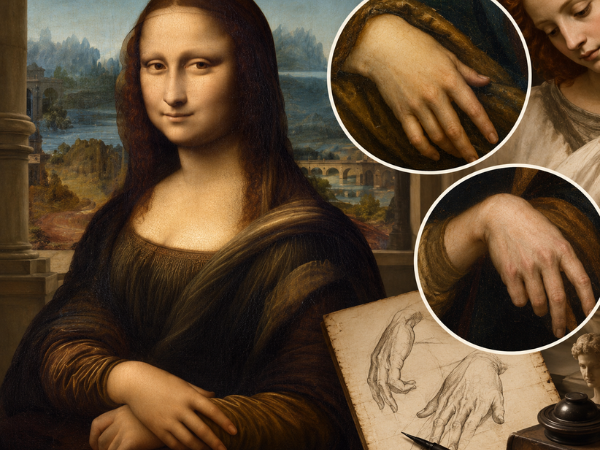
Renaissance art is celebrated for its innovation in perspective, anatomy, and realism, yet one curious detail often stands out: the hands. Many paintings from this period feature hands that look oddly shaped, stiff, or exaggerated. This peculiarity has fascinated art historians and casual viewers alike, raising questions about why such skilled artists struggled with this part of the human body. Hands are complex, with intricate bone structures, muscles, and gestures that convey subtle meaning. Capturing them accurately was a daunting task, even for masters of the Renaissance. The strange hands we see today are not simply mistakes but reflections of the artistic challenges, evolving techniques, and symbolic choices of the time.
Why Were Hands So Difficult to Paint?
Hands posed a unique challenge because they are both anatomically complex and emotionally expressive. Unlike faces, which artists studied extensively, hands required mastery of proportion, foreshortening, and gesture. Renaissance painters often exaggerated or simplified them to fit the composition.
- Bone and muscle complexity – Hands contain 27 bones and numerous joints, making them difficult to depict accurately.
- Gesture symbolism – Hands often carried religious or cultural meaning, so artists emphasized certain poses over realism.
- Foreshortening issues – Depicting fingers at angles was technically demanding with early perspective methods.
- Limited anatomical study – Before widespread dissections, artists relied on observation rather than scientific accuracy.
- Compositional balance – Hands were sometimes elongated or stylized to guide the viewer’s eye across the painting.
Ultimately, the difficulty lay in balancing anatomical truth with artistic intention. Many painters chose expression over precision, resulting in hands that appear strange to modern viewers but served symbolic or compositional purposes in their time.
Renaissance Artists and the Challenge of Human Anatomy
The Renaissance marked a turning point in the study of anatomy, but artists were still learning. While figures like Leonardo da Vinci dissected cadavers to understand the human body, most painters had limited access to such studies. Hands, with their intricate structure, became a stumbling block.
- Leonardo da Vinci – His anatomical sketches reveal deep study of hand bones and muscles.
- Michelangelo – His sculptures show powerful, exaggerated hands that emphasize strength.
- Raphael – His paintings often feature delicate, elongated fingers, prioritizing elegance over realism.
- Albrecht Dürer – His detailed drawings of praying hands highlight both anatomical accuracy and spiritual symbolism.
- Caravaggio – His dramatic use of light and shadow sometimes obscured anatomical flaws in hands.
These artists pushed boundaries, but even their mastery could not fully overcome the difficulty of rendering hands naturally. Their works reflect both progress in anatomical study and the artistic compromises of the era.
How Did Artists Learn to Draw Hands?
Training in Renaissance workshops focused on copying masters and studying live models. However, hands were rarely the central subject, meaning apprentices often lacked specialized practice.
- Apprenticeship system – Young artists copied their teacher’s works, inheriting stylized depictions of hands.
- Study of classical sculpture – Ancient statues provided models, but hands were often idealized rather than realistic.
- Sketching from life – Artists drew hands from live models, though poses were limited.
- Anatomical manuals – Early printed guides helped, but they simplified complex structures.
- Religious symbolism – Hands were studied more for their gestures in sacred art than for anatomical accuracy.
This training produced hands that were functional within compositions but often lacked naturalism. The emphasis was on conveying meaning rather than anatomical perfection, which explains why so many Renaissance hands look stylized or awkward today.
Why Do Fingers Look So Unnatural in Some Paintings?
Fingers often appear stiff, elongated, or oddly bent in Renaissance art. This was not always due to lack of skill but rather artistic choices.
- Exaggerated length – Long fingers conveyed elegance and grace, especially in portraits.
- Rigid poses – Symbolic gestures required clarity, leading to unnatural stiffness.
- Foreshortening errors – Perspective mistakes made fingers look distorted.
- Limited anatomical knowledge – Without detailed study, artists misrepresented joints and proportions.
- Compositional needs – Fingers were arranged to direct attention or balance the painting.
These distortions gave fingers an unnatural look, but they also served artistic and symbolic purposes. What seems strange today was often intentional, reflecting Renaissance ideals of beauty and meaning.
The Role of Perspective in Renaissance Hands
Perspective revolutionized Renaissance art, but applying it to hands was especially difficult. Fingers extend in multiple directions, requiring precise foreshortening.
- Linear perspective – Developed by Brunelleschi, it worked well for architecture but was harder to apply to anatomy.
- Foreshortening challenges – Fingers pointing toward the viewer often looked stubby or distorted.
- Symbolic clarity – Artists sometimes sacrificed perspective accuracy to preserve gesture meaning.
- Compositional depth – Hands were used to create spatial layering, even if proportions suffered.
- Experimentation – Early attempts at perspective often produced awkward results, especially in complex poses.
Perspective gave Renaissance art its depth, but hands remained a weak point. Their multidirectional structure made them one of the hardest tests of perspective mastery.
Did Renaissance Artists Make Anatomical Mistakes?
Yes, many Renaissance paintings contain anatomical errors in hands. However, these mistakes were often the result of limited knowledge rather than carelessness.
- Incorrect bone proportions – Fingers sometimes had too many or too few joints.
- Overly flexible poses – Hands bent in ways impossible for real anatomy.
- Exaggerated size – Hands were sometimes too large or too small compared to the body.
- Simplified structure – Artists reduced hands to basic shapes for clarity.
- Stylized gestures – Symbolism often outweighed anatomical correctness.
These errors remind us that Renaissance art was a blend of science and symbolism. While artists sought realism, they also prioritized meaning, leading to hands that appear anatomically flawed but artistically intentional.
Famous Renaissance Paintings With Unusual Hands
Several iconic works showcase the strange hands of the Renaissance, highlighting both the challenge and artistry involved.
- Leonardo da Vinci’s “The Last Supper” – The apostles’ hands are expressive but sometimes awkwardly proportioned.
- Michelangelo’s “Creation of Adam” – The famous reaching hands are powerful but anatomically exaggerated.
- Raphael’s “School of Athens” – Philosophers gesture with elongated, stylized fingers.
- Albrecht Dürer’s “Praying Hands” – A study that captures detail but still feels stiff.
- Botticelli’s “The Birth of Venus” – Venus’s hands are delicate yet oddly posed.
These examples show that even masterpieces contain unusual hands. Rather than flaws, they reflect the artistic priorities of the Renaissance—expression, symbolism, and beauty over strict anatomical accuracy.