Art has always been a mirror of human creativity, culture, and imagination. Across centuries, artists have developed distinct styles that reflect their societies, philosophies, and personal visions. From the balanced realism of the Renaissance to the dreamlike imagery of Surrealism, each style offers unique insights into how humans perceive and express the world. This article explores major art styles, their defining features, and famous examples that continue to inspire audiences today.
What Are Art Styles?
Art styles are categories or movements that describe how artists approach visual expression. They encompass techniques, themes, and philosophies that define the look and feel of artworks. Understanding art styles helps us trace cultural history and appreciate the diversity of human creativity.
- Definition – Art styles are recurring methods or approaches in visual art.
- Cultural Influence – Styles often reflect the values, politics, and beliefs of their time.
- Techniques – Each style emphasizes specific methods, such as brushwork, color use, or composition.
- Examples – Renaissance, Baroque, Impressionism, Cubism, and more.
- Evolution – Styles evolve as artists challenge traditions and experiment with new ideas.
By studying art styles, we gain a deeper appreciation of how creativity adapts to changing times and continues to shape cultural identity.
Renaissance Art: Realism, Balance & Famous Examples
The Renaissance (14th–17th century) marked a rebirth of classical ideals, emphasizing realism, proportion, and harmony. Artists sought to depict the human form and natural world with scientific precision and beauty.
- Realism – Use of perspective and anatomy to create lifelike figures.
- Balance – Symmetry and proportion inspired by classical Greek and Roman ideals.
- Famous Artists – Leonardo da Vinci, Michelangelo, Raphael.
- Iconic Works – Mona Lisa, The School of Athens, The Last Supper.
- Legacy – Foundations for modern Western art and scientific illustration.
Renaissance art remains celebrated for its pursuit of perfection and its ability to blend science with beauty, inspiring generations of artists.
Baroque Art: Drama, Movement & Emotion
Baroque art (17th–18th century) emerged as a response to religious and political upheaval, characterized by grandeur, intensity, and emotional depth.
- Drama – Strong contrasts of light and shadow (chiaroscuro).
- Movement – Dynamic compositions that guide the viewer’s eye.
- Emotion – Expressive gestures and vivid storytelling.
- Famous Artists – Caravaggio, Peter Paul Rubens, Rembrandt.
- Iconic Works – The Calling of Saint Matthew, The Night Watch.
Baroque art’s theatricality and emotional power continue to captivate audiences, making it one of the most dramatic styles in art history.
Impressionism: Light, Color & Everyday Scenes
Impressionism (late 19th century) revolutionized painting by focusing on fleeting moments, light effects, and everyday life.
- Light – Capturing natural light through quick brushstrokes.
- Color – Vibrant palettes to evoke atmosphere and mood.
- Everyday Scenes – Depictions of urban life, leisure, and landscapes.
- Famous Artists – Claude Monet, Pierre-Auguste Renoir, Edgar Degas.
- Iconic Works – Impression, Sunrise, Dance at Le Moulin de la Galette.
Impressionism challenged academic traditions, paving the way for modern art by celebrating spontaneity and personal perception.
Post-Impressionism: Bold Color & Expressive Forms
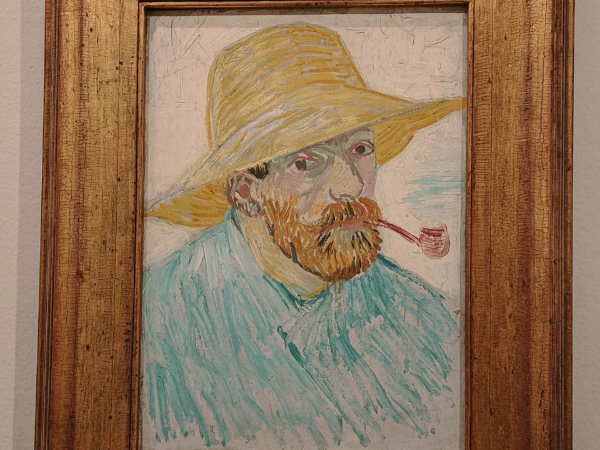
Post-Impressionism was not a single unified movement but rather a collection of artists who expanded upon Impressionist ideas while pushing art into new emotional and symbolic territories. Emerging in the late 19th century, this style emphasized personal expression, bold experimentation, and deeper meaning beyond surface appearances.
- Bold Color – Intense hues to convey mood and symbolism.
- Expressive Forms – Distorted shapes to highlight emotion.
- Famous Artists – Vincent van Gogh, Paul Cézanne, Paul Gauguin.
- Iconic Works – Starry Night, The Card Players, Where Do We Come From?.
- Legacy – Influenced Expressionism and modern abstraction.
Post-Impressionism expanded the boundaries of art, showing how color and form could express inner emotions beyond realism.
Cubism: Geometric Shapes & Multiple Perspectives
Cubism, developed in the early 20th century, was one of the most radical departures from traditional art. Founded by Pablo Picasso and Georges Braque, it rejected the idea of depicting subjects from a single viewpoint.
- Geometric Shapes – Simplified forms resembling cubes and angular structures.
- Multiple Perspectives – Viewing subjects from different angles at once.
- Famous Artists – Pablo Picasso, Georges Braque.
- Iconic Works – Les Demoiselles d’Avignon, Violin and Candlestick.
- Legacy – Foundation for abstract and modern art movements.
Cubism challenged traditional representation, reshaping how artists and audiences perceive reality.
Surrealism: Dreams, Symbols & Imagination
Surrealism, which flourished in the 1920s and 1930s, was more than an art style—it was a cultural movement deeply influenced by psychology, philosophy, and literature. Rooted in the ideas of Sigmund Freud, Surrealist artists sought to unlock the unconscious mind, blending dreamlike imagery with everyday reality.
- Dreams – Inspired by Freudian psychology and dream imagery.
- Symbols – Strange juxtapositions and symbolic objects.
- Imagination – Free expression beyond rational thought.
- Famous Artists – Salvador Dalí, René Magritte, Max Ernst.
- Iconic Works – The Persistence of Memory, The Son of Man.
Surrealism remains influential in literature, film, and visual arts, inspiring creativity that transcends logic.
Abstract Art: Shapes, Colors & Ideas
Abstract art emerged in the early 20th century as artists began to move away from depicting recognizable subjects. Instead of focusing on realism, abstract artists explored shapes, colors, and ideas to express emotions, concepts, and rhythms.
- Shapes – Geometric or organic forms without direct references.
- Colors – Used to evoke emotion and rhythm.
- Ideas – Conceptual focus rather than physical representation.
- Famous Artists – Wassily Kandinsky, Piet Mondrian, Jackson Pollock.
- Iconic Works – Composition VII, Broadway Boogie Woogie, No. 5, 1948.
Abstract art encourages viewers to interpret meaning personally, making it one of the most open-ended and thought-provoking styles.