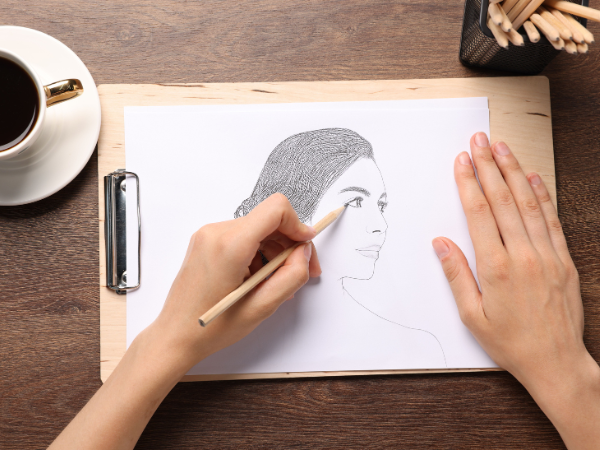
Portrait drawing is one of the most rewarding yet challenging areas of art. Capturing a person’s likeness requires not only technical skill but also an understanding of subtle details that bring life to the drawing. From proportions and shading to emotional expression, every element contributes to realism. This article explores nine essential aspects of portrait drawing, each with practical advice, structured lists, and unique insights to help artists refine their craft.
Understanding Facial Proportions
A realistic portrait begins with accurate proportions. The human face follows certain universal guidelines, and learning these helps artists avoid distortions. While every face is unique, the general structure provides a reliable foundation for drawing.
- Eye Placement – Eyes are typically positioned halfway down the head.
- Nose Length – The bottom of the nose usually aligns with the bottom of the ears.
- Mouth Position – The mouth sits about halfway between the nose and chin.
- Symmetry – Faces are not perfectly symmetrical, but balance is key.
- Head Shape – The skull defines the overall contour, so sketching it lightly first helps.
By internalizing these proportional rules, artists can create portraits that look natural and believable. Even when drawing stylized or expressive faces, understanding proportions ensures the artwork maintains coherence and realism.
Capturing Lifelike Eyes
Eyes are often described as the “windows to the soul,” and in portrait drawing, they are the focal point. A well-drawn eye conveys emotion and personality instantly.
- Shape Accuracy – Avoid almond stereotypes; observe the unique curvature.
- Iris Detailing – Add subtle shading to suggest depth and light reflection.
- Highlights – A small white spot can make eyes appear moist and alive.
- Eyelids – Upper and lower lids frame the eye and must be drawn carefully.
- Surrounding Shadows – Eyebrows and sockets add realism through shading.
Mastering eyes requires patience and observation. By focusing on details like reflections and subtle asymmetry, artists can elevate their portraits from flat sketches to expressive works of art.
Drawing Expressive Mouths
The mouth plays a crucial role in showing emotion. Smiles, frowns, and subtle shifts in lips can completely change the mood of a portrait.
- Lip Structure – Upper lips are thinner and darker; lower lips fuller and lighter.
- Corners of the Mouth – These define expressions and must be carefully observed.
- Teeth Visibility – Avoid drawing every tooth; suggest them with shading.
- Shadows – The area under the lower lip often has a soft shadow.
- Dynamic Curves – Lips rarely form straight lines; curves add realism.
By studying how lips move and change with emotion, artists can capture expressions that feel authentic. A well-rendered mouth adds depth and personality to the portrait.
Shaping the Nose Naturally
The nose is often overlooked, yet it defines the character of a face. Its three-dimensional structure requires careful shading rather than heavy outlines.
- Bridge and Tip – Observe how light falls across these areas.
- Nostrils – Suggest them with shading, not harsh lines.
- Angles – Different perspectives change the nose dramatically.
- Soft Transitions – Blend shadows smoothly for realism.
- Individual Variation – Each nose has unique proportions worth capturing.
A natural-looking nose enhances the overall harmony of the portrait. By focusing on subtle shading and avoiding overemphasis, artists can achieve a balanced and realistic representation.
Building Strong Facial Outlines
The outline of the face sets the stage for all other features. It defines the head’s shape and ensures proportions remain consistent.
- Jawline Definition – Strong or soft jawlines influence character.
- Cheekbone Placement – High or low cheekbones affect facial balance.
- Hairline Position – Determines forehead size and overall proportions.
- Chin Shape – Rounded, square, or pointed chins add individuality.
- Neck Connection – Smooth transitions between head and neck are essential.
Outlines should be drawn lightly at first, allowing adjustments as features are added. A well-structured outline ensures the portrait feels cohesive and realistic.
Mastering Shading Techniques
Shading transforms flat sketches into lifelike portraits. It creates depth, volume, and mood by simulating light and shadow.
- Hatching and Cross-Hatching – Useful for texture and tonal variation.
- Blending – Smooth transitions achieved with blending tools or fingers.
- Contrast – Strong highlights and deep shadows add drama.
- Gradients – Subtle shifts in tone make skin look natural.
- Light Source Awareness – Always consider where light originates.
Effective shading requires practice and observation. By mastering these techniques, artists can make portraits appear three-dimensional and emotionally engaging.
Conveying Emotion Through Expression
Expressions breathe life into portraits. A neutral face may look realistic, but emotion makes it memorable.
- Eyebrow Movement – Raised or furrowed brows change mood instantly.
- Eye Shape – Squinting or widening conveys intensity.
- Mouth Curves – Smiles, smirks, or frowns define emotion.
- Cheek Tension – Muscles shift subtly during expressions.
- Overall Harmony – All features must align to show genuine emotion.
Capturing emotion requires observation of real people. By sketching from life or photos, artists learn how subtle changes in facial features create powerful expressions.
Adding Realistic Hair
Hair frames the face and adds personality. While complex, it can be simplified into shapes and flows rather than individual strands.
- Volume and Flow – Sketch hair in sections, not strands.
- Texture Representation – Curly, straight, or wavy hair requires different strokes.
- Highlights – Light reflecting on hair adds realism.
- Layering – Build depth by overlapping sections.
- Integration – Ensure hair connects naturally to the scalp.
Realistic hair enhances the portrait’s overall impact. By focusing on flow and texture rather than excessive detail, artists can achieve convincing results.
Practicing Consistently for Improvement
Portrait drawing is a skill that improves with consistent practice. Each attempt teaches new lessons about proportion, shading, and expression.
- Daily Sketching – Short sessions build muscle memory.
- Life Drawing – Observing real faces sharpens accuracy.
- Photo Studies – Useful for practicing different angles.
- Experimentation – Try new techniques to expand skills.
- Self-Critique – Reviewing work helps identify areas for growth.
Consistency is the key to mastery. By dedicating time regularly, artists develop confidence and precision, leading to portraits that truly capture the essence of their subjects.


