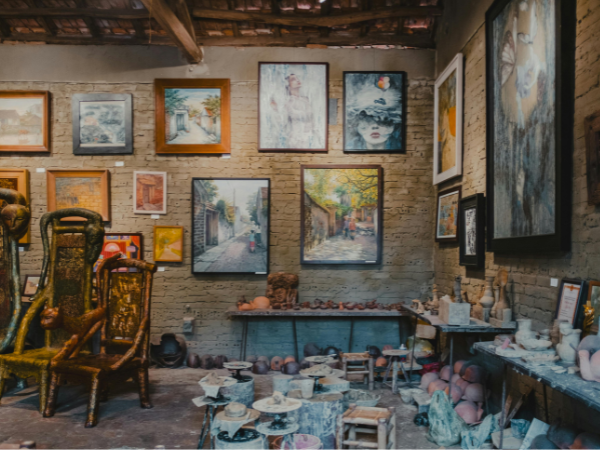
Art has always been more than just paint on canvas—it is a reflection of culture, history, and human creativity. Some paintings transcend their medium to become cultural treasures, commanding astronomical prices at auctions and private sales. These works are not only valued for their aesthetic beauty but also for their rarity, provenance, and the prestige they confer upon their owners. Below, we explore the most expensive paintings ever sold, analyzing why they achieved such extraordinary valuations.
Leonardo da Vinci’s Salvator Mundi
Leonardo da Vinci’s Salvator Mundi shocked the art world when it sold for over $450 million in 2017. This painting, depicting Christ as the savior of the world, is one of fewer than 20 known works by da Vinci, making it exceptionally rare. Its rediscovery and restoration added to the mystique, fueling intense bidding.
- Artist: Leonardo da Vinci
- Year: Circa 1500
- Sale Price: $450.3 million
- Auction House: Christie’s, New York
- Buyer: Reportedly Saudi Crown Prince Mohammed bin Salman
The astronomical price reflects not only da Vinci’s unparalleled reputation but also the painting’s scarcity and historical significance. Collectors viewed it as a once-in-a-lifetime opportunity to own a piece of Renaissance history. Beyond its religious symbolism, the painting embodies the genius of da Vinci’s technique, blending realism with spiritual depth. Its sale redefined the upper limits of the art market, cementing its place as the most expensive painting ever sold.
Willem de Kooning’s Interchange
Abstract Expressionism reached its peak with Willem de Kooning’s Interchange, which sold privately for $300 million in 2015. The painting exemplifies de Kooning’s energetic brushwork and bold use of color, capturing the dynamism of post-war American art.
- Artist: Willem de Kooning
- Year: 1955
- Sale Price: $300 million
- Buyer: Kenneth C. Griffin (hedge fund billionaire)
- Style: Abstract Expressionism
The painting’s value lies in its role as a cornerstone of modern art. De Kooning was a central figure in Abstract Expressionism, and Interchange represents a pivotal moment in his career. Collectors prize it for its historical importance and its influence on generations of artists. The sale highlighted the growing demand for post-war American art, which continues to dominate high-end auctions. Its record-setting price underscored the prestige associated with owning a masterpiece from one of the most influential movements of the 20th century.
Paul Cézanne’s The Card Players
Paul Cézanne’s The Card Players is part of a series of five paintings, but one version sold for approximately $250 million in 2011 to the Royal Family of Qatar. The work depicts peasants engaged in a card game, rendered with Cézanne’s signature geometric forms and muted palette.
- Artist: Paul Cézanne
- Year: 1890s
- Sale Price: $250 million
- Buyer: Royal Family of Qatar
- Series: Five versions exist
The painting’s value stems from its rarity and its role in shaping modern art. Cézanne’s exploration of form and perspective influenced Cubism and countless later movements. Owning The Card Players is akin to possessing a cornerstone of art history. The sale also reflected Qatar’s ambition to build a world-class art collection, positioning itself as a cultural hub. The painting’s quiet dignity and groundbreaking technique make it one of the most significant acquisitions in modern times.
Paul Gauguin’s Nafea Faa Ipoipo (When Will You Marry?)
Paul Gauguin’s Nafea Faa Ipoipo sold for around $210 million in 2015. Painted during Gauguin’s time in Tahiti, it depicts two young women in traditional attire, blending Western techniques with Polynesian themes.
- Artist: Paul Gauguin
- Year: 1892
- Sale Price: $210 million
- Buyer: Reportedly Qatar Museums
- Style: Post-Impressionism
The painting’s allure lies in its exotic subject matter and Gauguin’s bold departure from European traditions. Collectors value it for its cultural significance and its role in expanding the boundaries of art. Gauguin’s Tahitian works are rare and highly sought after, representing a pivotal chapter in his career. The sale underscored the global demand for masterpieces that bridge cultures and challenge conventions. Its vibrant colors and symbolic depth continue to captivate audiences worldwide.
Jackson Pollock’s Number 17A
Jackson Pollock’s Number 17A sold for $200 million in 2016, exemplifying his revolutionary drip-painting technique. The work embodies the spontaneity and energy of Abstract Expressionism, making it a landmark in modern art.
- Artist: Jackson Pollock
- Year: 1948
- Sale Price: $200 million
- Buyer: Kenneth C. Griffin
- Technique: Drip painting
Pollock’s radical approach redefined painting, emphasizing process over product. Number 17A is prized for its historical importance and its role in shaping contemporary art. Collectors view it as a symbol of innovation and freedom, qualities that resonate deeply in the art market. The sale reinforced Pollock’s status as a pioneer, whose works continue to inspire and challenge perceptions. Its chaotic beauty and groundbreaking technique make it one of the most iconic paintings of the 20th century.
Mark Rothko’s No. 6 (Violet, Green and Red)
Mark Rothko’s No. 6 sold for $186 million in 2014, showcasing his signature color field technique. The painting features large blocks of color that evoke emotional responses, embodying Rothko’s belief in the spiritual power of art.
- Artist: Mark Rothko
- Year: 1951
- Sale Price: $186 million
- Buyer: Dmitry Rybolovlev (Russian billionaire)
- Style: Color Field Painting
Rothko’s works are celebrated for their meditative quality and emotional depth. No. 6 exemplifies his ability to use color as a vehicle for transcendence. Collectors prize Rothko’s paintings for their rarity and their profound impact on viewers. The sale highlighted the enduring appeal of mid-century American art, which continues to command high prices. Rothko’s legacy as a master of abstraction ensures that his works remain among the most coveted in the art world.
Pablo Picasso’s Les Femmes d’Alger (Version O)
Pablo Picasso’s Les Femmes d’Alger (Version O) sold for $179 million in 2015, setting a record for the artist. The painting is part of a series inspired by Eugène Delacroix, blending Cubism with vibrant color and complex composition.
- Artist: Pablo Picasso
- Year: 1955
- Sale Price: $179.4 million
- Auction House: Christie’s, New York
- Style: Cubism
Picasso’s influence on modern art is unparalleled, and Les Femmes d’Alger represents a culmination of his experimentation. Collectors value it for its historical significance and its role in Picasso’s oeuvre. The sale underscored the global demand for Picasso’s works, which remain central to the art market. Its bold composition and cultural references make it a masterpiece that continues to inspire and challenge viewers. The painting’s record-setting price reflects Picasso’s enduring legacy as one of the greatest artists of all time.
Amedeo Modigliani’s Nu Couché
Amedeo Modigliani’s Nu Couché sold for $170 million in 2015, showcasing his distinctive style of elongated forms and sensual subjects. The painting is one of his most famous nudes, celebrated for its elegance and intimacy.
- Artist: Amedeo Modigliani
- Year: 1917–1918
- Sale Price: $170.4 million
- Auction House: Christie’s, New York
- Style: Modernism
Modigliani’s nudes are rare and highly sought after, embodying a blend of classical beauty and modern innovation. Collectors prize Nu Couché for its sensuality and its role in redefining portraiture. The sale highlighted the growing appreciation for early 20th-century art, which continues to captivate audiences. Modigliani’s unique vision and emotional depth ensure that his works remain among the most valuable in the art world. The painting’s record-setting price reflects its timeless appeal and its place in art history.
Francis Bacon’s Three Studies of Lucian Freud
Francis Bacon’s Three Studies of Lucian Freud sold for $142 million in 2013, setting a record for the artist. The triptych depicts Bacon’s friend and rival, Lucian Freud, in a series of distorted portraits that capture psychological intensity.
- Artist: Francis Bacon
- Year: 1969
- Sale Price: $142.4 million
- Auction House: Christie’s, New York
- Style: Expressionism
Bacon’s works are celebrated for their raw emotion and their exploration of human vulnerability. Three Studies of Lucian Freud is prized for its personal significance and its artistic innovation. Collectors value it for its rarity and its role in shaping contemporary portraiture. The sale underscored the enduring appeal of Bacon’s works, which continue to resonate with audiences. Its psychological depth and bold style make it one of the most important paintings of the 20th century.