When a painting is damaged in a museum, the first priority is to protect the artwork from further harm. The painting may be removed from display while conservators examine the damage, identify the materials involved, and decide what treatment is appropriate.
Not every damaged painting is immediately restored. Museums usually document its condition carefully before choosing between cleaning, repair, stabilization, or more extensive conservation.
What Happens Immediately After a Painting Is Damaged?
Museum staff first secure the area and make sure the artwork is safe. If necessary, the painting is moved to a controlled environment where specialists can examine it more closely.
The museum may also:
- Photograph the damaged areas
- Record the painting’s condition
- Check the frame and support
- Protect loose or fragile material
- Review security footage if the damage was accidental or intentional
- Prevent further exposure to light, humidity, or temperature changes
The initial goal is stabilization, not making the painting look perfect as quickly as possible.
How Museums Assess Painting Damage
Conservators examine the painting to determine what has actually been affected. A scratch on the surface, for example, requires a different approach from a tear through the canvas or widespread paint loss.
They may look at:
| Type of damage | What conservators examine |
|---|---|
| Scratches | Depth and location of surface damage |
| Tears | Canvas fibers and structural stability |
| Paint loss | Areas where original paint has separated |
| Water damage | Swelling, staining, mold, or paint distortion |
| Frame damage | Support and protection around the artwork |
| Vandalism | Extent and type of foreign material or marks |
Specialized imaging and other examination methods can sometimes reveal damage that is difficult to see under normal lighting.
Who Decides How a Damaged Painting Should Be Treated?
The decision is normally made by museum conservators, often in consultation with curators, scientists, collection managers, and other specialists.
Several factors matter. The team considers the painting’s age, materials, historical importance, previous restoration work, current condition, and the extent of the damage.
The objective is not simply to make the painting look new. Conservation aims to preserve as much original material and historical information as possible.
The Conservation Process for Damaged Paintings
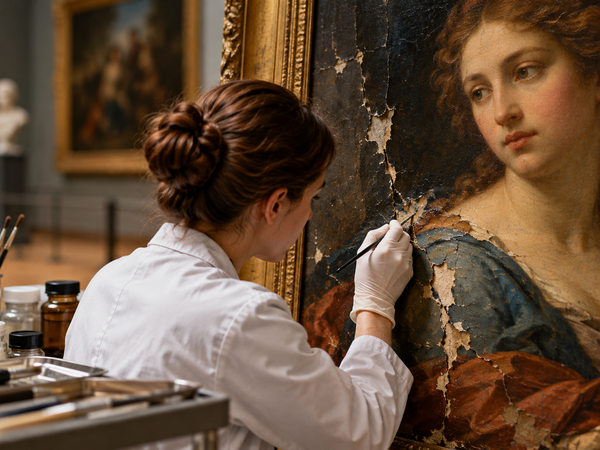
The treatment depends entirely on the type of damage. A conservator may stabilize loose paint, repair a torn canvas, remove harmful material, or carefully replace missing areas where appropriate.
A typical process may include:
- Documentation – The artwork is photographed and its condition is recorded.
- Examination – Conservators identify the materials and extent of damage.
- Stabilization – Fragile areas are secured to prevent additional deterioration.
- Treatment – Appropriate conservation or restoration work is performed.
- Final documentation – The completed treatment is recorded for future reference.
Museums generally try to ensure that treatment can be understood and documented rather than hiding the fact that restoration occurred.
Can a Damaged Painting Be Restored to Its Original Condition?
Usually, a painting cannot be returned perfectly to the exact condition it had before the accident or deterioration.
Some damage can be made far less visible, while other losses remain part of the artwork’s history. Conservators must balance appearance with preservation and avoid unnecessarily altering original material.
In some cases, a small area of missing paint can be visually integrated with careful retouching. Major structural damage may be much more difficult to reverse.
When a Painting Is Too Damaged to Display
A severely damaged painting may remain out of public view until it is considered stable enough for exhibition. In some cases, it may stay in storage or be displayed only under carefully controlled conditions.
A museum may decide not to return a painting to its previous location if:
- The artwork remains structurally fragile
- Environmental conditions could cause further deterioration
- Restoration is incomplete
- The painting requires additional research
- Display could put the artwork at unnecessary risk
Being removed from exhibition does not necessarily mean that a painting is permanently lost.
How Much Does Painting Restoration Cost?
There is no standard price for restoring a museum painting. Costs depend on the artwork’s size, materials, condition, complexity of the treatment, and amount of specialist work required.
A minor repair may be relatively straightforward, while a large painting with structural damage can require extensive conservation work and months of specialist attention.
For important works, museums may also need specialized equipment, scientific analysis, custom materials, and documentation as part of the project.
How Long Museum Painting Restoration Takes
Restoration can take anywhere from a short period to several years, depending on the condition of the artwork and the complexity of the treatment.
| Damage level | Possible timeframe |
|---|---|
| Minor surface damage | Days to weeks |
| Moderate paint or canvas damage | Weeks to months |
| Major structural damage | Months to years |
| Complex historical restoration | Potentially several years |
These are general ranges rather than fixed schedules. Conservators often work slowly because removing too much material or making an irreversible change can permanently affect the artwork.
What Happens After a Painting Is Restored?
After treatment, the museum usually documents the finished work and may continue monitoring its condition. The painting can then return to exhibition if the environment is suitable and the artwork is considered stable.
Sometimes the restored painting looks almost unchanged to visitors. In other cases, careful examination may reveal areas where original material was lost and later treated.
Most importantly, the conservation record becomes part of the painting’s history. Future conservators can use this information to understand what happened, what materials were used, and how the artwork was treated.
A damaged museum painting is therefore not simply “fixed.” Its recovery involves research, documentation, technical expertise, and careful decisions intended to preserve the artwork for future generations.