Art has always fascinated viewers not only for its beauty but also for the way it changes depending on how we look at it. Some paintings appear one way from a distance, yet reveal entirely new details when examined closely. This phenomenon is not accidental—it is the result of deliberate artistic techniques, brushwork, and the play of color and texture. Understanding why paintings look different up close helps us appreciate the genius of artists across centuries, from the Impressionists to modern abstract painters.
What Makes Some Paintings Look Different Up Close?
Many paintings are designed to shift in appearance depending on viewing distance. From afar, the composition may seem smooth and unified, but up close, the surface reveals intricate details, layered textures, or even hidden elements. This duality is part of the magic of art.
- Layered brushstrokes – Artists often build up paint in layers, creating depth that only becomes visible at close range.
- Color blending – What looks like a single shade from afar may actually be dozens of tiny strokes of different colors.
- Optical illusions – Some painters use techniques that trick the eye, making shapes or figures appear only when viewed closely.
- Hidden details – Artists sometimes embed symbols, signatures, or miniature figures that reward close inspection.
- Texture variations – Thick impasto or delicate glazes create tactile differences that change perception.
This interplay between distance and detail is what makes certain artworks endlessly fascinating. A painting is not just a flat image—it is a living surface that invites exploration.
How Brushstrokes, Texture, and Color Create Different Perspectives
The way a painting is constructed directly influences how it is perceived. Brushstrokes, texture, and color are the building blocks of this transformation.
- Brushstroke direction – Long sweeping strokes can suggest movement, while short dabs create shimmering effects.
- Impasto technique – Thick paint applied with a palette knife catches light differently depending on angle and distance.
- Pointillism – Tiny dots of color blend into smooth images when viewed from afar but remain distinct up close.
- Glazing layers – Transparent layers of paint alter tones subtly, visible only when examined closely.
- Color vibration – Juxtaposing complementary colors creates visual energy that shifts with distance.
Together, these techniques allow artists to control how their work is experienced. A painting can be calm and unified from across the room, yet dynamic and complex when studied closely.
Famous Paintings That Look Different Up Close
Some of the world’s most celebrated artworks reveal surprising qualities when examined in detail.
- Mona Lisa – Leonardo’s masterpiece contains subtle layers of glaze that create her enigmatic smile.
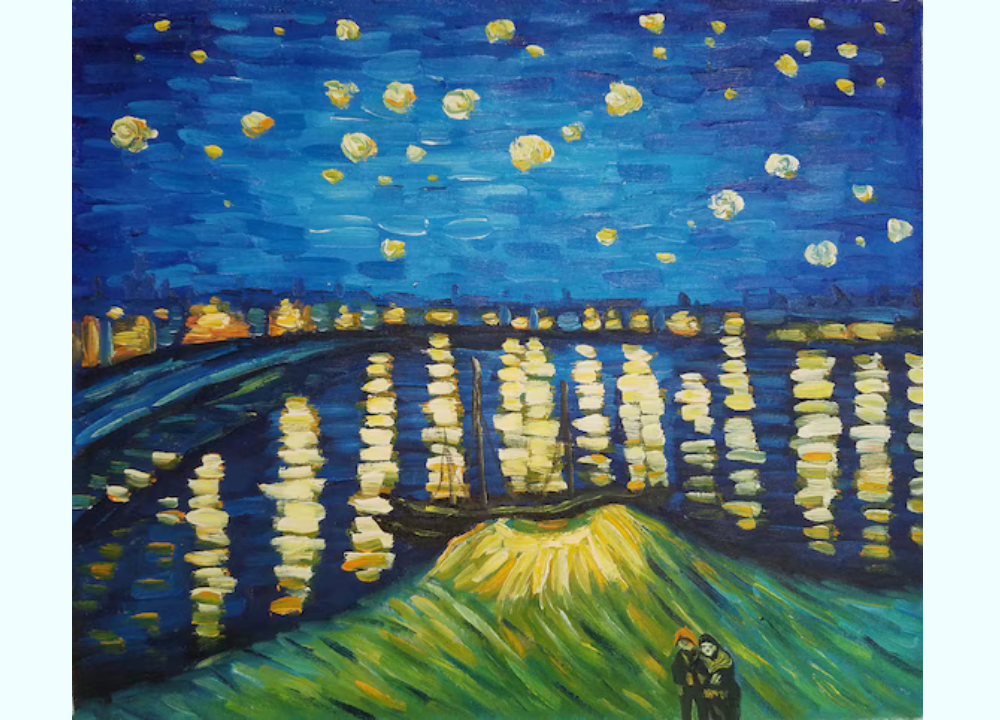
- Starry Night – Van Gogh’s swirling brushstrokes create movement that feels alive up close.
- The Persistence of Memory – Dalí’s surreal clocks reveal fine textures and hidden symbolism.
- Water Lilies – Monet’s canvases dissolve into abstract strokes when viewed closely.
- The Night Watch – Rembrandt’s play of light and shadow reveals intricate figures in the background.
These paintings remind us that masterpieces are not static—they are dynamic experiences shaped by how we choose to look at them.
Impressionist Paintings That Reveal Hidden Details
The Impressionists revolutionized art by focusing on light, color, and fleeting impressions rather than precise detail. Their works often look different depending on viewing distance.
- Claude Monet – His landscapes dissolve into patches of color up close but form cohesive scenes from afar.
- Pierre-Auguste Renoir – Renoir’s portraits shimmer with dappled light that only reveals itself in detail.
- Edgar Degas – Degas used pastel strokes that appear rough up close but elegant at a distance.
- Camille Pissarro – His cityscapes combine thousands of strokes that merge into bustling scenes.
- Berthe Morisot – Her delicate brushwork creates subtle emotional depth visible only in close study.
Impressionist paintings reward both distant admiration and intimate inspection, offering two experiences in one canvas.
Modern Paintings That Transform at Close Range
Modern and contemporary artists often push this concept further, creating works that deliberately change depending on perspective.
- Jackson Pollock – His drip paintings appear chaotic up close but form rhythmic patterns from afar.
- Mark Rothko – Rothko’s color fields seem simple at a distance but reveal subtle tonal shifts up close.
- Chuck Close – His portraits are made of abstract shapes that only resolve into faces when viewed from afar.
- Gerhard Richter – Richter’s blurred works shift between realism and abstraction depending on distance.
- Yayoi Kusama – Her polka-dot patterns create immersive environments that change with proximity.
These artists challenge viewers to reconsider what a painting is, making distance itself part of the artistic experience.
How Viewing Distance Changes the Way We See Art
The human eye and brain interpret images differently depending on how far away we are. This is why paintings can transform so dramatically.
- Peripheral vision – From afar, we rely more on overall composition than detail.
- Focus shift – Up close, our eyes pick out textures and brushstrokes.
- Light reflection – Distance changes how light interacts with paint surfaces.
- Psychological perception – Our brains interpret abstract strokes differently depending on context.
- Museum design – Galleries are arranged to encourage both distant and close viewing.
This dynamic relationship between distance and perception is what makes art endlessly engaging.
Tips for Appreciating Paintings in Museums
To fully enjoy paintings, it helps to approach them with intention. Museums are designed to allow viewers to experience artworks at multiple distances.
- Step back – Start by viewing the painting from across the room to see the overall composition.
- Move closer – Examine brushstrokes, textures, and hidden details.
- Change angles – Look at the painting from different sides to see how light affects it.
- Take your time – Spend several minutes with each artwork to notice changes.
- Compare works – Observe how different artists use distance to shape perception.
By combining distant admiration with close inspection, you unlock the full richness of the artistic experience.