Art history is filled with towering figures, but few names resonate as strongly as Claude Monet and Vincent van Gogh. Both artists transformed the way we perceive painting, light, and emotion, yet their approaches were radically different. Monet pioneered Impressionism, focusing on fleeting moments of light and atmosphere, while Van Gogh infused his canvases with raw emotion and bold, swirling strokes. Comparing them is not about deciding who was “better,” but rather understanding how each shifted the trajectory of modern art in unique ways.
The Rise of Impressionism: Monet’s Vision
Claude Monet’s contribution to art was the birth and refinement of Impressionism. His paintings captured the transient effects of light and color, breaking away from rigid academic traditions. Monet’s brushwork was loose, his colors vibrant, and his subjects often everyday scenes transformed into poetic visions.
- Light and Atmosphere – Monet emphasized how sunlight and weather altered perception.
- Everyday Subjects – He painted gardens, rivers, and train stations, elevating ordinary life.
- Series Paintings – Works like Water Lilies and Haystacks explored changing conditions over time.
- Brushwork Innovation – His rapid strokes suggested movement and immediacy.
- Rejection of Tradition – He defied the Academy’s rules, sparking controversy and admiration.
Monet’s vision was not about detail but about sensation. He taught viewers to see the world as a fleeting impression, forever changing how art captured reality.
Van Gogh’s Emotional Revolution
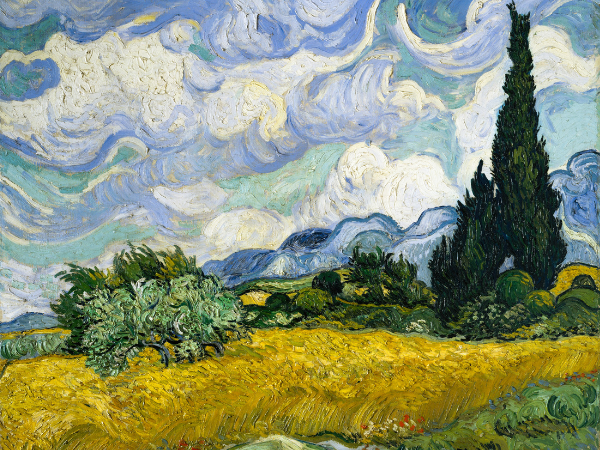
Vincent van Gogh’s art was a storm of emotion, color, and movement. Unlike Monet’s calm observations, Van Gogh painted with urgency, channeling his inner turmoil into vivid canvases. His works were not just depictions of landscapes or people—they were emotional experiences.
- Expressive Brushwork – Thick, swirling strokes conveyed intensity and passion.
- Bold Colors – He used vibrant yellows, blues, and greens to heighten emotional impact.
- Psychological Depth – Paintings like The Starry Night reflected his inner struggles.
- Symbolic Landscapes – Wheat fields, cypress trees, and night skies became metaphors for life and death.
- Human Connection – His portraits revealed vulnerability and empathy.
Van Gogh’s revolution was not about technique alone—it was about making art a mirror of the soul. His influence paved the way for Expressionism and modern emotional art.
Monet’s Influence on Modern Art
Monet’s legacy lies in his ability to redefine perception. His Impressionist techniques inspired generations of artists to break free from realism and embrace experimentation.
- Abstract Foundations – His focus on light and color anticipated abstract movements.
- Landscape Innovation – He transformed landscapes into studies of perception.
- Global Reach – Impressionism spread across Europe, America, and Asia.
- Museum Presence – His works dominate major collections worldwide.
- Artistic Freedom – He encouraged artists to paint outside studios, embracing spontaneity.
Monet’s art was a turning point, showing that painting could capture fleeting sensations rather than fixed realities. His influence remains visible in contemporary art’s focus on perception and atmosphere.
Van Gogh’s Legacy in Expressionism
Van Gogh’s impact was felt most strongly in Expressionism, where artists sought to convey inner emotions rather than external appearances. His bold style became a blueprint for emotional intensity in art.
- Expressionist Inspiration – German and Austrian artists drew heavily from his techniques.
- Color Psychology – His use of color influenced theories of emotional resonance.
- Posthumous Fame – Though unrecognized in life, his art exploded in popularity after his death.
- Cultural Icon – Van Gogh became a symbol of the tortured genius.
- Film and Literature – His life inspired countless movies, books, and plays.
Van Gogh’s legacy is not just artistic—it is cultural. He embodies the idea of art as a vessel for human struggle and triumph.
Comparing Techniques: Monet vs Van Gogh
While both artists revolutionized painting, their techniques diverged dramatically. Monet sought harmony and light, while Van Gogh pursued intensity and emotion.
- Brushwork – Monet’s strokes were soft and fleeting; Van Gogh’s were thick and forceful.
- Color Use – Monet blended subtle hues; Van Gogh used bold contrasts.
- Subject Matter – Monet painted gardens and rivers; Van Gogh painted fields and skies.
- Mood – Monet conveyed serenity; Van Gogh conveyed turbulence.
- Philosophy – Monet focused on perception; Van Gogh focused on emotion.
Their differences highlight the richness of modern art’s evolution. Together, they expanded the boundaries of what painting could express.
Cultural Impact Beyond Art
Both Monet and Van Gogh influenced culture beyond the canvas. Their works shaped fashion, design, and even psychology.
- Design Influence – Monet’s colors inspired interior design trends.
- Emotional Resonance – Van Gogh’s struggles sparked discussions on mental health.
- Tourism – Museums and towns associated with them attract millions.
- Education – Their works are staples in art history curricula.
- Pop Culture – Both artists appear in films, music, and literature.
Their cultural impact proves that art is not confined to galleries—it permeates everyday life and global consciousness.
Who Changed Art More?
Determining who changed art more is complex. Monet reshaped perception, while Van Gogh reshaped emotion. Each opened doors to new movements and philosophies.
- Monet’s Contribution – Impressionism altered how artists saw the world.
- Van Gogh’s Contribution – Expressionism altered how artists expressed themselves.
- Different Paths – Monet’s calm vs Van Gogh’s intensity.
- Shared Legacy – Both expanded art’s possibilities.
- Enduring Influence – Their works remain central to modern art.
Ultimately, both changed art in ways that cannot be measured against each other—they complemented one another in shaping modern creativity.