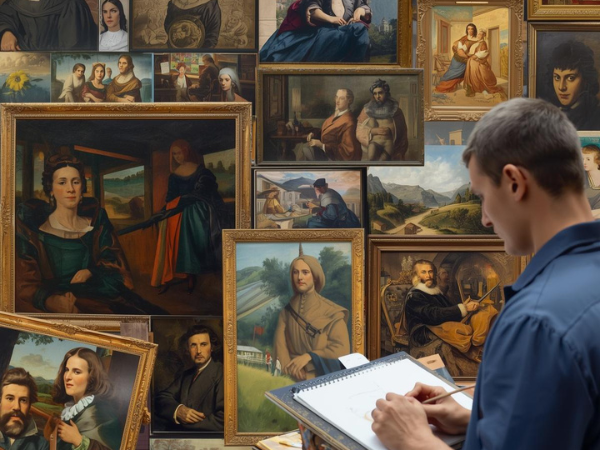
Composition is the backbone of any successful artwork. It determines how viewers perceive the relationships between shapes, colors, and subjects within a drawing. A well‑arranged composition guides the eye, creates balance, and enhances storytelling. Artists use composition to control focus, emphasize important details, and evoke emotions.
Understanding the Basics of Composition
Composition begins with the fundamentals: balance, proportion, and visual flow. These principles help artists organize elements so that the drawing feels harmonious.
Core Principles:
- Balance: Distributing visual weight evenly across the artwork.
- Proportion: Ensuring objects relate to each other in size and scale.
- Rhythm: Repetition of shapes or lines to create movement.
- Focus: Directing attention to the main subject.
- Unity: Making all elements feel connected.
By mastering these basics, artists can avoid cluttered or confusing drawings. A strong composition doesn’t happen by chance—it’s the result of deliberate choices. Once you understand these principles, you can experiment with breaking the rules to create dynamic, eye‑catching art.
Rule of Thirds in Drawing
The rule of thirds is a classic guideline that divides the canvas into nine equal sections using two vertical and two horizontal lines. Placing key elements along these lines or intersections creates natural balance.
Applications of the Rule of Thirds:
- Positioning the subject off‑center for visual interest.
- Aligning horizons with the top or bottom third.
- Using intersections to highlight focal points.
- Avoiding symmetry that feels static.
- Creating tension by breaking the rule intentionally.
This technique prevents drawings from feeling too rigid or predictable. By shifting the subject away from the center, artists introduce movement and intrigue. The rule of thirds is especially useful in landscapes and portraits, where placement dramatically affects mood.
Creating Balance and Harmony
Balance ensures that no part of the drawing feels too heavy or distracting. Harmony ties all elements together, making the artwork cohesive.
Ways to Achieve Balance:
- Symmetrical placement for stability.
- Asymmetrical balance using contrasting elements.
- Color distribution to balance warm and cool tones.
- Size variation to offset large and small objects.
- Texture placement to avoid overwhelming areas.
Harmony comes from consistency—using similar styles, colors, or shapes throughout the piece. When balance and harmony work together, the drawing feels complete and satisfying. Without them, even strong individual elements can appear disconnected.
Using Lines to Guide the Viewer’s Eye
Lines are powerful tools in composition. They direct attention, create movement, and establish structure.
Types of Lines in Composition:
- Horizontal lines for calmness and stability.
- Vertical lines for strength and growth.
- Diagonal lines for energy and motion.
- Curved lines for softness and flow.
- Implied lines formed by gaze or gestures.
By strategically placing lines, artists can lead viewers toward focal points. For example, a diagonal path in a landscape can guide the eye toward a distant mountain. Lines also help establish perspective, making drawings feel more dynamic and realistic.
Depth and Perspective in Composition
Depth adds realism and dimension to a drawing. Perspective creates the illusion of space, making flat surfaces feel three‑dimensional.
Techniques for Depth:
- Overlapping objects to show distance.
- Size reduction for faraway elements.
- Atmospheric perspective using lighter tones.
- Linear perspective with vanishing points.
- Foreground, middle ground, and background separation.
These methods help artists build immersive scenes. A well‑constructed perspective draws viewers into the artwork, making them feel part of the environment. Without depth, drawings risk appearing flat and lifeless.
Focal Points and Emphasis
Every drawing needs a focal point—the area that captures immediate attention. Emphasis ensures that the viewer knows where to look first.
Ways to Create Emphasis:
- Contrast in color or value.
- Sharp detail against blurred surroundings.
- Brightness in a darker composition.
- Unique shapes among repetitive forms.
- Placement at strategic intersections.
A strong focal point prevents the viewer’s eye from wandering aimlessly. It anchors the composition and communicates the artist’s intent. Without emphasis, drawings may feel unfocused or overwhelming.
Negative Space and Its Role
Negative space refers to the empty areas around and between subjects. It’s just as important as the objects themselves.
Benefits of Negative Space:
- Prevents overcrowding in the composition.
- Highlights the main subject.
- Creates balance between filled and empty areas.
- Adds elegance through simplicity.
- Encourages creative use of emptiness.
Artists often overlook negative space, but it can transform a drawing. By allowing breathing room, the composition feels more intentional and refined. Negative space also enhances contrast, making subjects stand out more clearly.
Movement and Rhythm in Composition
Movement guides the viewer’s eye across the artwork, while rhythm creates patterns that feel natural. Together, they add energy and flow.
Ways to Create Movement and Rhythm:
- Repetition of shapes or colors.
- Directional lines leading across the canvas.
- Gradual changes in size or tone.
- Curved paths that mimic natural motion.
- Alternating elements for visual rhythm.
These techniques keep the viewer engaged, encouraging them to explore the entire drawing. Movement and rhythm prevent static compositions, making the artwork feel alive and dynamic.
Breaking the Rules for Creative Impact
While guidelines help, breaking them can produce striking results. Artists often bend rules to challenge expectations and create unique styles.
Examples of Rule-Breaking:
- Centering subjects for bold emphasis.
- Using clashing colors for dramatic effect.
- Overlapping focal points to create tension.
- Ignoring perspective for abstract expression.
- Filling negative space with intricate detail.
Breaking rules works best when done intentionally. It shows mastery of composition and adds personality to the artwork. By experimenting, artists discover new ways to express creativity and push boundaries.