Contour drawing is a foundational practice in art that sharpens observation skills and strengthens the connection between what you see and what you draw. By focusing on the outlines and edges of objects rather than shading or detail, artists learn to capture the essence of form with precision. This method trains the eye to notice subtle shifts in line, proportion, and perspective, ultimately improving overall drawing ability. Below is a structured article with nine sections, each designed to provide unique insights and practical exercises for mastering contour drawing.
What is Contour Drawing?
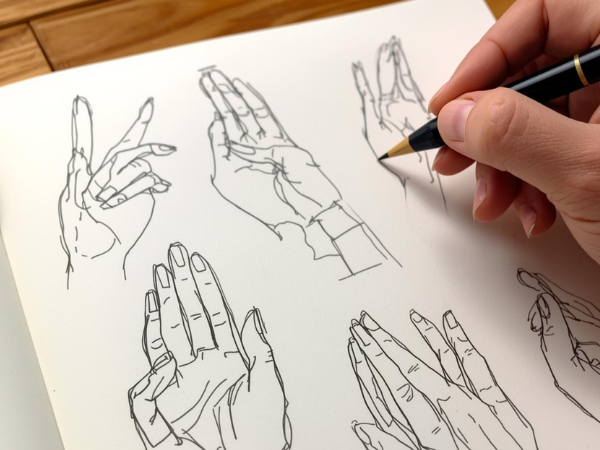
Contour drawing is the practice of sketching the outline of a subject without lifting your pencil from the paper. It emphasizes observation over technique, encouraging artists to slow down and truly see the subject. This exercise is not about producing polished artwork but about training the eye-hand connection.
- Focus on outlines rather than shading
- Draw continuously without lifting the pencil
- Observe shapes and proportions carefully
- Capture the essence of the subject
- Practice regularly for improvement
By concentrating on edges and boundaries, contour drawing helps artists develop a deeper awareness of form. It is often used as a warm-up exercise in art classes because it builds confidence and accuracy. Over time, this practice enhances both technical skill and creative expression, making it a vital tool for beginners and professionals alike.
Benefits of Contour Drawing
Contour drawing offers more than just artistic improvement—it cultivates patience, mindfulness, and sharper visual perception. By slowing down and focusing on the subject, artists learn to appreciate details they might otherwise overlook.
- Improves hand-eye coordination
- Strengthens observational skills
- Encourages mindfulness and focus
- Builds confidence in line work
- Enhances overall drawing accuracy
These benefits extend beyond art. The discipline of contour drawing can improve concentration in other areas of life, fostering a habit of careful observation. For artists, it lays the groundwork for more advanced techniques like gesture drawing and shading. The simplicity of the exercise makes it accessible to anyone, regardless of skill level, while its impact on artistic growth is profound.
Blind Contour Drawing
Blind contour drawing is a variation where the artist never looks at the paper while drawing. Instead, they keep their eyes fixed on the subject, allowing the hand to follow the eye’s movement.
- Keep eyes on the subject at all times
- Avoid glancing at the paper
- Draw slowly and continuously
- Accept imperfections as part of the process
- Use simple objects for practice
This exercise may produce distorted results, but that is the point—it forces the artist to trust their observation rather than their memory. Blind contour drawing sharpens focus and strengthens the connection between sight and movement. Over time, it reduces reliance on preconceived notions of how objects “should” look, leading to more authentic and accurate drawings.
Continuous Line Drawing
Continuous line drawing involves sketching a subject without lifting the pencil from the paper. Unlike blind contour, the artist can look at both the subject and the drawing, but the line must remain unbroken.
- Choose a subject with clear outlines
- Keep the pencil on the paper at all times
- Move slowly to maintain control
- Emphasize fluidity over precision
- Experiment with different objects
This technique encourages fluidity and rhythm in drawing. It helps artists avoid hesitation and develop confidence in their lines. Continuous line drawing also produces expressive results, often with a sense of movement and energy. Practicing this regularly builds muscle memory and improves the ability to capture forms quickly and effectively.
Cross-Contour Drawing
Cross-contour drawing adds dimension by following the surface of the subject with lines, rather than just its outline. It is a way to suggest volume and depth.
- Observe curves and planes of the subject
- Draw lines that wrap around the form
- Use varying line thickness for emphasis
- Practice with simple geometric shapes
- Apply to complex forms like faces or hands
This technique trains the eye to see three-dimensional structure. By mapping the surface with lines, artists gain a better understanding of perspective and form. Cross-contour drawing is especially useful for sculptural subjects, as it reveals how light and shadow interact with surfaces. It bridges the gap between flat outlines and fully rendered drawings.
Gesture vs. Contour Drawing
Gesture drawing focuses on movement and energy, while contour drawing emphasizes structure and detail. Both are essential, but they serve different purposes.
- Gesture: captures motion and rhythm
- Contour: captures edges and boundaries
- Gesture: quick, loose strokes
- Contour: slow, deliberate lines
- Gesture: emphasizes action
- Contour: emphasizes observation
Understanding the difference helps artists choose the right approach for their goals. Gesture drawing is ideal for dynamic subjects like people in motion, while contour drawing suits still objects. Combining both techniques creates balanced artwork that is both lively and accurate. Practicing them side by side enhances versatility and adaptability.
Practical Contour Drawing Exercises
Structured exercises make contour drawing more effective. These activities can be practiced daily to strengthen skills.
- Blind contour with household objects
- Continuous line portraits of friends
- Cross-contour studies of fruit
- Quick contour sketches of plants
- Combining gesture and contour in one drawing
Each exercise targets a specific skill, from observation to fluidity. By rotating through different methods, artists avoid monotony and build a well-rounded foundation. These exercises are simple yet powerful, requiring only paper and pencil. Consistency is key—regular practice leads to noticeable improvement in accuracy and confidence.
Common Mistakes in Contour Drawing
Beginners often struggle with contour drawing because they rush or rely too much on memory. Recognizing mistakes helps avoid them.
- Drawing too quickly without observation
- Lifting the pencil too often
- Ignoring proportion and scale
- Over-focusing on details instead of outlines
- Avoiding imperfections instead of embracing them
Correcting these mistakes requires patience and discipline. Slowing down and trusting the process is essential. Contour drawing is not about perfection but about training the eye. Accepting imperfections allows growth, while consistent practice eliminates errors over time. Awareness of these pitfalls makes the exercise more effective and rewarding.
Advancing Beyond Contour Drawing
Once comfortable with contour drawing, artists can expand into more complex techniques. Contour serves as a foundation for advanced skills.
- Add shading to enhance depth
- Combine contour with gesture for dynamic results
- Experiment with cross-hatching
- Use contour as a base for painting
- Apply contour techniques to digital art
Advancing beyond contour drawing opens creative possibilities. It transforms simple outlines into expressive, detailed works. Artists who master contour find it easier to transition into realism, abstraction, or mixed media. The discipline of contour drawing remains valuable even at advanced levels, serving as a reminder of the importance of observation and precision.