History is filled with stories of artists who faced rejection, criticism, and failure before achieving greatness. These tales remind us that perseverance often matters more than initial acceptance. Many of the world’s most celebrated painters, musicians, and writers were once told they lacked talent or vision. Yet, through resilience and determination, they transformed rejection into motivation. This article explores nine famous artists who overcame obstacles, showing that rejection can be the spark that ignites success.
Vincent van Gogh: Rejection in Life, Recognition After Death
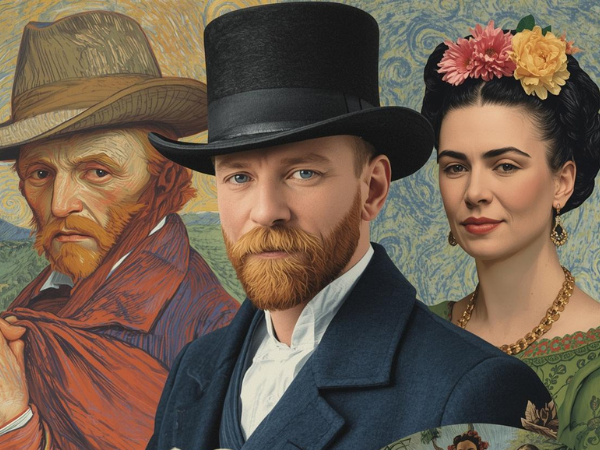
Vincent van Gogh is one of the most famous examples of an artist rejected during his lifetime. He struggled financially, sold only a handful of paintings, and was often dismissed by critics. His bold colors and emotional brushstrokes were considered too unconventional for the art world of his time.
Key points of rejection and success:
- Sold only one painting during his lifetime.
- Faced criticism for his unusual style and technique.
- Battled mental health challenges that affected his career.
- Gained recognition only after his death.
- Today, his works are among the most valuable in the world.
Van Gogh’s story demonstrates how rejection does not define talent. His art, once dismissed, now inspires millions. His legacy proves that innovation often requires time to be appreciated, and persistence can outlast rejection.
Claude Monet: Struggles Before Impressionism Was Accepted
Claude Monet, the father of Impressionism, faced harsh rejection from traditional art institutions. His loose brushwork and focus on light and atmosphere were criticized as unfinished and lacking detail. The Paris Salon, the dominant art exhibition of the time, rejected many of his works.
Key points of rejection and success:
- Early works rejected by the Paris Salon.
- Critics mocked Impressionism as “blurry” and “incomplete.”
- Struggled financially in his early career.
- Founded the Impressionist movement with fellow artists.
- Later celebrated as a master of modern art.
Monet’s persistence helped redefine art. His rejection fueled the creation of Impressionism, a movement that changed painting forever. Today, his works are admired for their beauty and innovation, proving that rejection can lead to revolution.
J.K. Rowling: Rejected Before Harry Potter’s Success
Before becoming one of the most successful authors in history, J.K. Rowling faced numerous rejections. Publishers doubted the appeal of her manuscript about a young wizard. Twelve publishing houses turned her down before Bloomsbury finally accepted the book.
Key points of rejection and success:
- Rejected by multiple publishers.
- Told children’s fantasy would not sell.
- Struggled financially as a single mother.
- Harry Potter became a global phenomenon.
- Books sold over 500 million copies worldwide.
Rowling’s journey shows that rejection can be a stepping stone. Her persistence brought Harry Potter to life, inspiring generations of readers. Her story is a reminder that belief in one’s work can overcome repeated rejection.
Frida Kahlo: Overlooked Before Becoming Iconic
Frida Kahlo’s art was initially overshadowed by her husband Diego Rivera’s fame. Critics dismissed her deeply personal and surreal style as too unconventional. For years, she struggled to gain recognition outside Mexico.
Key points of rejection and success:
- Early works overshadowed by Rivera’s career.
- Critics dismissed her surreal, symbolic style.
- Faced health challenges that influenced her art.
- Later recognized as a feminist and cultural icon.
- Today, her works are celebrated worldwide.
Kahlo’s rejection did not stop her from painting her truth. Her art, once overlooked, now resonates globally. She is remembered not only as an artist but also as a symbol of resilience and individuality.
Walt Disney: Fired Before Building an Empire
Walt Disney, the creator of Mickey Mouse and Disneyland, faced rejection early in his career. He was fired from a newspaper job for “lacking imagination.” His first animation company went bankrupt, and investors doubted his ideas.
Key points of rejection and success:
- Fired for “lack of creativity.”
- Early business ventures failed.
- Struggled to secure funding for projects.
- Created Mickey Mouse, leading to global success.
- Built Disney into a worldwide entertainment empire.
Disney’s story shows how rejection can fuel creativity. His failures taught him resilience, and his vision transformed entertainment. Today, Disney is synonymous with imagination, proving that rejection can be the foundation of success.
Emily Dickinson: Rejected During Her Lifetime
Emily Dickinson, now considered one of America’s greatest poets, faced rejection during her life. Publishers found her unconventional style difficult to accept. Only a few of her poems were published, often heavily edited.
Key points of rejection and success:
- Published only a handful of poems in her lifetime.
- Editors altered her work to fit traditional styles.
- Lived in isolation, writing nearly 1,800 poems.
- Posthumously recognized as a literary genius.
- Today, her poetry is studied worldwide.
Dickinson’s rejection highlights how innovation can be misunderstood. Her unique style, once dismissed, is now celebrated for its originality. Her legacy proves that rejection does not erase brilliance.
Elvis Presley: Rejected Before Becoming the King of Rock
Elvis Presley, the “King of Rock and Roll,” was initially told he had no future in music. After an early audition, he was advised to return to truck driving. Record labels doubted his talent and style.
Key points of rejection and success:
- Rejected by early record labels.
- Told he lacked musical talent.
- Persevered with live performances.
- Signed with Sun Records, launching his career.
- Became one of the most influential musicians in history.
Elvis’s rejection fueled his determination. His unique blend of country, blues, and rock reshaped music. Today, he is remembered as a cultural icon, proving that rejection cannot silence true talent.
Georgia O’Keeffe: Criticized Before Becoming a Modernist Pioneer
Georgia O’Keeffe, known for her bold flower paintings and modernist style, faced criticism early in her career. Her abstract works were considered too radical by traditional critics. She struggled to gain acceptance in the art world.
Key points of rejection and success:
- Early works criticized as too abstract.
- Faced skepticism from traditional art circles.
- Developed a unique modernist style.
- Gained recognition through exhibitions in New York.
- Became one of America’s most influential artists.
O’Keeffe’s rejection pushed her to refine her vision. Her bold style eventually won acclaim, and she became a pioneer of modern art. Her story shows that rejection can lead to innovation and lasting influence.
Stephen King: Rejected Before Becoming a Bestseller
Stephen King, one of the most successful authors of all time, faced rejection early in his career. His first novel, Carrie, was rejected by dozens of publishers. Discouraged, he threw the manuscript away, but his wife retrieved it and encouraged him to keep trying.
Key points of rejection and success:
- Carrie rejected by multiple publishers.
- Initially doubted his own talent.
- Encouraged by his wife to continue.
- Carrie became a bestseller, launching his career.
- Today, he has sold over 350 million books.
King’s story shows how rejection can nearly end a career, but persistence and support can revive it. His success proves that rejection is not the end—it can be the beginning of greatness.