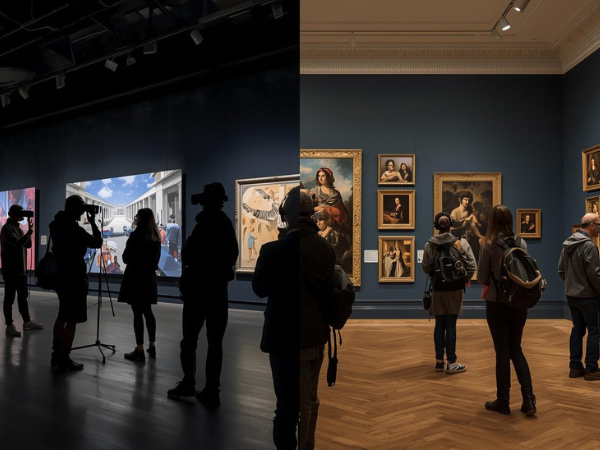
Art has always been a reflection of human creativity, but the way we experience it is rapidly evolving. The rise of virtual exhibitions challenges the dominance of traditional galleries, offering new opportunities for accessibility, innovation, and global reach. This article explores how technology reshapes the art world, comparing digital platforms with physical spaces.
1. Defining Virtual Exhibitions and Traditional Galleries
Virtual exhibitions are digital showcases accessible online, while traditional galleries are physical spaces where art is displayed. Each format offers unique experiences.
- Virtual Exhibitions – Online platforms accessible worldwide.
- Traditional Galleries – Physical venues with curated displays.
- Accessibility – Virtual is global; galleries are location-bound.
- Atmosphere – Galleries provide sensory immersion; virtual offers convenience.
- Interaction – Virtual allows digital tools; galleries foster face-to-face dialogue.
Virtual exhibitions democratize access, while galleries preserve the aura of physical presence. Together, they represent two sides of the same cultural coin, shaping how audiences engage with art in the digital age. The balance between them defines the future of artistic appreciation.
2. Accessibility and Global Reach
One of the greatest strengths of virtual exhibitions is accessibility. Unlike galleries limited by geography, digital platforms open doors to global audiences.
- Worldwide Access – Anyone with internet can view art.
- Inclusivity – Removes barriers for those with mobility challenges.
- Cost Efficiency – No travel expenses required.
- Time Flexibility – Available 24/7.
- Educational Reach – Students worldwide can explore collections.
Traditional galleries, however, offer local cultural immersion and community engagement. While virtual exhibitions expand reach, galleries maintain authenticity through physical presence. Both formats complement each other, ensuring art remains both globally accessible and locally meaningful.
3. Immersive Experience and Atmosphere
Traditional galleries excel at creating atmosphere—lighting, scale, and spatial design enhance the emotional impact of artworks. Virtual exhibitions attempt to replicate this digitally.
- Lighting Control – Galleries use curated lighting.
- Spatial Awareness – Physical scale impacts perception.
- Digital Tools – VR headsets simulate immersion.
- Interactive Features – Zoom, rotate, or explore in 3D.
- Sensory Elements – Galleries engage multiple senses.
While virtual exhibitions innovate with interactivity, they cannot fully replicate the tactile and spatial qualities of galleries. Yet, they offer unique digital experiences that blend art with technology, creating new forms of engagement.
4. Cost and Sustainability
Hosting exhibitions involves costs, and sustainability is increasingly important. Virtual exhibitions reduce expenses and environmental impact compared to traditional galleries.
- Lower Overheads – No physical space required.
- Reduced Travel – Cuts carbon emissions.
- Digital Preservation – Art stored securely online.
- Energy Efficiency – Less resource consumption.
- Scalability – Easy to expand collections digitally.
Traditional galleries, however, support local economies and tourism. While virtual exhibitions are cost-effective and eco-friendly, galleries remain vital cultural hubs. The future may involve hybrid models balancing sustainability with community presence.
5. Interaction and Engagement
Audience interaction differs greatly between formats. Galleries encourage personal dialogue, while virtual exhibitions rely on digital tools.
- Face-to-Face Conversations – Visitors engage with curators.
- Guided Tours – Human-led experiences.
- Digital Chat Tools – Online Q&A sessions.
- Gamification – Interactive quizzes or challenges.
- Social Media Integration – Share experiences instantly.
Virtual exhibitions enhance engagement through technology, while galleries foster human connection. Both approaches enrich the art experience, offering diverse ways to interact with creativity.
6. Educational Opportunities
Education is central to art appreciation. Virtual exhibitions expand learning opportunities beyond borders.
- Online Resources – Articles, videos, and lectures.
- Interactive Learning – Quizzes and guided tours.
- Global Collaboration – Students connect worldwide.
- Accessibility for Schools – Affordable exposure to art.
- Archival Access – Digital preservation of rare works.
Traditional galleries provide hands-on workshops and direct exposure to original pieces. Virtual exhibitions complement this by offering scalable, inclusive education. Together, they broaden horizons for learners everywhere.
7. Technology Innovations in Virtual Exhibitions
Technology drives the evolution of virtual exhibitions, making them increasingly sophisticated.
- Virtual Reality (VR) – Immersive 3D environments.
- Augmented Reality (AR) – Overlaying art in real spaces.
- AI Curation – Personalized recommendations.
- Blockchain – Securing digital art ownership.
- Interactive Platforms – Multi-user experiences.
These innovations redefine how audiences interact with art. While galleries remain timeless, virtual exhibitions push boundaries, merging creativity with cutting-edge technology.
8. Cultural Value and Authenticity
Authenticity is often associated with physical galleries, where original works are displayed. Virtual exhibitions challenge this perception.
- Original Presence – Galleries showcase real artifacts.
- Digital Reproductions – High-resolution replicas online.
- Aura of Authenticity – Physical presence carries weight.
- Cultural Preservation – Digital archives safeguard heritage.
- Hybrid Models – Combining digital and physical.
Virtual exhibitions expand cultural value by preserving and sharing art globally. Galleries, however, maintain authenticity through direct encounters. Both formats enrich cultural heritage in unique ways.
9. The Future of Art Exhibitions
The future lies in hybrid models that merge digital innovation with physical tradition.
- Hybrid Events – Combining online and onsite experiences.
- Global Collaboration – Artists connect across borders.
- Sustainable Practices – Eco-friendly approaches.
- Inclusive Access – Reaching diverse audiences.
- Technological Growth – Continuous innovation.
Virtual exhibitions and traditional galleries are not rivals but partners. Together, they shape the evolving landscape of art, ensuring creativity remains accessible, authentic, and inspiring for generations to come.